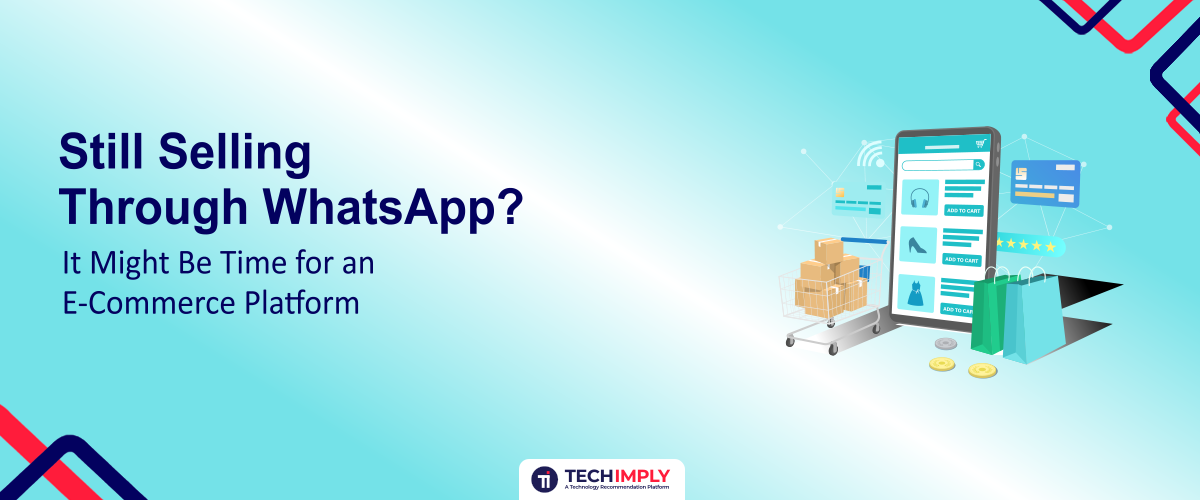
You have a product. People want it. You have been selling through Instagram DMs, WhatsApp forwards, and the occasional referral. It is working, but just about. Orders get mixed up. Payment follow-ups eat your evenings. And every time someone asks for a proper website link to share, you have nothing to send them.
At some point, doing it manually stops being scrappy and starts costing you real orders. That is the moment most sellers start looking at e-commerce platforms. If you are not sure what they actually do, which one is right for your business, or what questions to ask before buying one, this guide is for you.
What is an E-Commerce Platform?
An e-commerce platform is software that lets you build and run an online store. It handles the storefront your customers see; the backend where you manage products and orders; and everything in between, including payments processing, shipping, taxes, and inventory.
Instead of building a website from scratch or juggling separate tools for orders, payments, and delivery, an e-commerce platform brings it all into one place. You add your products, set your prices, connect a payment method, and you are ready to start taking orders.
Some platforms are designed for simplicity, letting you go live in a day. Others are built for scale, giving you full control over how your store looks and works. The right choice depends on what kind of business you are running and where you want it to go.
- Do You Know?
- India's e-commerce market is projected to reach $350 billion by 2030. Small and mid-sized sellers who moved online between 2020 and 2023 reported an average 40% increase in their customer reach within the first year.
Signs You Need a Proper E-Commerce Platform
Most sellers start without one and only look for a platform when things get unmanageable. Here is how you know you have reached that point:
•You are taking orders on WhatsApp or Instagram and tracking them in a notebook or spreadsheet
•Customers ask for a website or a proper checkout link, and you do not have one
•You have missed orders or sent the wrong items because there is no organised system
•Collecting payment is a back-and-forth process involving UPI screenshots and manual confirmation
•You have no way to track which products sell well and which ones are sitting idle
•Returns and refunds are handled entirely on gut feel, with no formal process
•You want to run a discount or sale, but have no way to apply it automatically
If more than two of these are true, you are already losing time and probably orders. A proper e-commerce platform fixes all of this.

Pro-tip
You do not need a full catalogue to get started. Many successful online stores launched with just five to ten products. Start small, learn what sells, and expand from there.Key Features to Understand Before You Buy
E-commerce platforms are not all built the same. Here are the core features to look for and what each one actually means for your day-to-day business:
Catalogue Management: This is where you add products, write descriptions, upload photos, and set prices. A good platform makes it easy to organize your catalog by category, manage variants like size and color, and update stock levels without technical knowledge.
- Order Management: Every order placed on your store lands in a dashboard. You can see what was ordered, by whom, when it was paid, and what its delivery status is. No more WhatsApp scrolling to find out if someone paid.
- Payment Gateway: A good e-commerce platform connects to payment gateways so customers can pay by UPI, card, net banking, or EMI at checkout. Payments are confirmed automatically. You do not have to chase anyone for a screenshot.
- Ecommerce Inventory Management: Tracks your stock in real time. When a product sells, the count goes down. When stock runs low, you get an alert. This alone prevents a significant number of overselling situations and customer complaints.
- Shipping and Delivery: Most platforms integrate with courier partners so you can generate shipping labels, track deliveries, and manage returns from within the platform. Some even let customers choose their preferred delivery speed at checkout.
- Promotions and Coupons: Create discount codes, run limited-time sales, or offer bundle pricing without manually calculating anything. The platform applies the discount at checkout and tracks how each promotion is performing.
Understanding What is Working: Analytics and Reports
Shows you which products sell the most, where your traffic is coming from, how many people add to cart but do not buy, and what your revenue looks like over time. This data is what separates sellers who grow from those who guess.
Not every business needs every feature on day one. A small handmade goods seller may only need a basic storefront and UPI payments, while a mid-sized fashion brand will need inventory management, courier integration, and detailed analytics.
Questions to Ask the Vendor Before You Commit
Once you have shortlisted a few platforms, these are the questions that will help you avoid a bad purchase decision:
Product and Platform Capabilities
1.Does the platform support the kind of products I sell, physical, digital, or both?
2.How many products can I list on the plan I am considering?
3.Can I customise how my store looks, or am I limited to preset templates?
4.Does it support multiple payment options, including UPI, cards, and COD?
5.Is there a mobile app for managing orders on the go?
Integrations and Growth
1.Does it integrate with courier partners like Shiprocket, Delhivery, or Bluedart?
2.Can I connect it to my Instagram, Facebook, or WhatsApp shop?
3.Does it support GST-compliant invoicing automatically?
4.What happens if I want to move to a higher plan later?
Fees, Commissions, and Hidden Costs
1.Is there a transaction fee on every sale, on top of the monthly plan cost?
2.Are payment gateway charges included or separate?
3.What is the total cost per month if I process 200 orders?
4.Is there a setup or onboarding fee?
- Do You Know?
- Many e-commerce platform providers charge a percentage of every sale as a transaction fee, on top of the monthly subscription. On high-volume stores, this can add up to more than the subscription itself. Always calculate total cost based on your expected order volume.
What Will the Vendor Ask You?
When you reach out to an e-commerce platform vendor, they will have their own set of questions. Knowing what to expect makes the conversation faster and gets you a recommendation that actually fits.
Here is what vendors typically want to understand before they set up a demo:
Your Business Type and Scale
•What are you selling, physical products, digital downloads, or services?
•How many products do you currently have or plan to list?
•Do you sell in one city, across India, or internationally?
•Are you an individual seller, a registered business, or a brand?
Where You Are Selling Today
•Are you currently selling on Instagram, WhatsApp, a marketplace like Amazon or Flipkart, or all of these?
•Do you already have a website, or are you starting fresh?
•Have you used an e-commerce platform before? If yes, what made you look for something different?
What Matters Most to You
•Is ease of setup your priority, or do you need more control over how the store looks?
•Do you need COD support, or is prepaid payment enough for your customers?
•Do you need the platform to handle returns and refunds automatically?
•How important is WhatsApp or social media integration to your sales process?
Your Launch Timeline and Budget
•When do you want the store to go live?
•What is your monthly budget for the platform?
•Are you looking for a free trial first, or ready to commit if the demo goes well?
- Do You Know?
- Vendors ask whether you currently sell on marketplaces like Amazon or Flipkart because your own store and a marketplace serve different purposes. A good vendor will help you understand how to use both together rather than pushing you to choose one over the other.
How to Request a Demo and Why You Should Do It Through Techimply
Trying to evaluate e-commerce platforms on your own is overwhelming. Most platforms have long feature pages, confusing pricing tables, and sales teams that follow up aggressively once you fill in a contact form.
Techimply takes a different approach. Here is how the process works:
6.Visit Techimply and browse the e-commerce platform category. Each listing includes a clear breakdown of features, pricing plans, supported payment gateways, and verified reviews from real users.
7.Shortlist two or three platforms based on your product type, budget, and the features that matter most to your business.
8.Submit a demo request through Techimply. You fill in a short form with your business details, what you sell, and what you need from the platform.
9.Techimply connects you with the vendor and arranges the demo on your behalf. No cold calls, no inbox spam, no chasing.
10.Attend the demo with your questions ready. Ask the vendor to show you the order management flow, payment setup, and how returns are handled, not just the pretty storefront.
11.After the demo, reach back out to Techimply if you need help comparing your options before making a decision.
Explore the List of Software on Techimply
Pro-tip
When filling out the demo request on Techimply, mention how you are currently taking orders. Vendors who know you are coming from WhatsApp or Instagram will tailor the demo to show you exactly how the platform solves that specific problem.
Ready to Find the Right E-Commerce Platform for Your Business?
Selling online should not feel like running a manual operation forever. The right e-commerce platform takes the orders, handles the payments, tracks the stock, and gives you the data to grow, without you managing it all by hand.
Techimply makes the search easier. Our software directory lists verified e-commerce platform vendors with detailed feature information, honest pricing, and real user reviews, all in one place. Compare your options side by side and connect with vendors that fit your exact requirements.