Starting a dropshipping business has become one of the most accessible ways to enter online commerce without heavy investment. If you’ve ever wanted to sell products online without worrying about inventory or shipping logistics, this model offers a practical entry point. Unlike traditional retail, a dropshipping business allows you to focus on marketing and customer experience while third-party suppliers handle product storage and delivery.

Looking for Dropshipping Software?
Check out Techimply's List of the Best Dropshipping Software in India for your business.
Many entrepreneurs begin with shopify dropshipping because it simplifies store creation and integrations with suppliers. At the same time, exploring different dropshipping websites helps you understand tools, trends, and automation options available in the market. As a result, whether you are new to ecommerce and dropshipping or looking to expand.
What is Dropshipping?
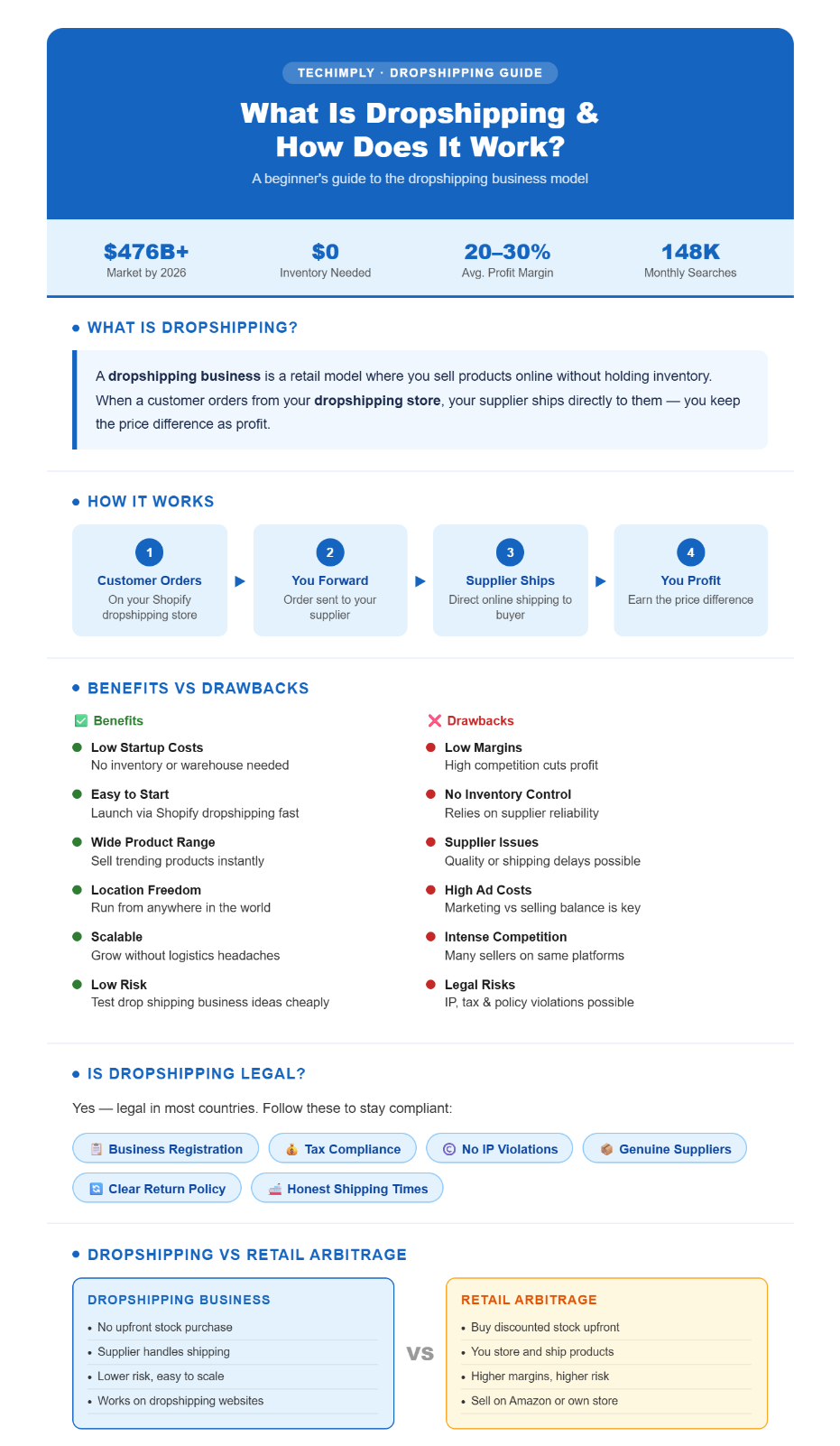
Dropshipping is a retail fulfillment method where you sell products without keeping them in stock. Instead, when a customer places an order in your dropshipping store, you purchase the item from a third-party supplier who ships it directly to the customer.
In simple terms, you act as the middleman between the customer and the supplier. You don’t handle packaging, inventory, or online shipping, your supplier does. This model fits perfectly into the broader concept of ecommerce dropshipping business, where digital storefronts replace physical inventory management.
Do you know?
Many successful sellers use automation tools that connect suppliers directly to their stores, reducing manual work by up to 70%.
How Does Dropshipping Work?
Understanding how a dropshipping business operates is straightforward. Let’s break it down step by step:
-
You create an online store using platforms like Shopify.
-
You list products sourced from dropshipping suppliers.
-
A customer places an order on your website.
-
You forward the order details to the supplier.
-
The supplier handles packaging and online shipping.
-
The customer receives the product directly.
Because of this streamlined process, tools like dropshipping solutions and great ship management systems help automate order tracking, inventory syncing, and fulfilment.
Should You Start Dropshipping?
Before starting, you should evaluate whether this model aligns with your goals. A dropshipping business works well for beginners, side hustlers, and even experienced entrepreneurs testing new commerce model ideas.
However, success depends on your ability to market products effectively. For instance, Instagram dropshipping has gained popularity because visual platforms help showcase products and drive quick sales.
If you are exploring Drop shipping business ideas, consider niches like fashion, gadgets, home decor, or wellness products. Additionally, researching trending products for dropshipping gives you a competitive edge.
What are the Benefits of Dropshipping?
Whether you're exploring drop shipping business ideas or ready to launch your first ecommerce dropshipping business, the dropshipping model offers powerful advantages that make it one of the most accessible commerce model ideas available today.
1. Low Startup Costs
Unlike traditional retail, a dropshipping business requires no investment in inventory or warehouse space. You only pay for a product after a customer has already purchased it, making it ideal for entrepreneurs launching their first dropshipping store on a tight budget.
2. Easy to Start & Manage
Setting up a Shopify dropshipping store can be done in a matter of days. With the right dropshipping solutions, you can automate order forwarding, track shipments, and manage your entire ecommerce dropshipping business without a large team or technical expertise.
3. Wide Product Selection:
Since you don't pre-purchase stock, you have the freedom to list a vast range of products on your dropshipping websites, from fashion to electronics. You can quickly pivot to trending products for dropshipping based on market demand without any financial risk.
4. Scalability
As your dropshipping business grows, scaling is seamless. You can expand to new niches, add more dropshipping suppliers, or even tap into Instagram dropshipping, all without worrying about warehousing, staffing, or logistics infrastructure.
5. Location Independence
One of the greatest advantages of online shipping based businesses is that you can manage your dropshipping store from anywhere in the world. All you need is a laptop and an internet connection to run a fully operational ecommerce dropshipping business.
6. Less Risk
Because you never hold unsold stock, financial risk is significantly reduced. You can test multiple drop shipping business ideas simultaneously across different dropshipping websites and double down only on what works, making this a smart, low-risk entry into ecommerce.
7. Flexibility
A dropshipping business gives you the flexibility to experiment with different niches, pricing strategies, and marketing channels. Whether you're exploring Instagram dropshipping or testing new commerce model ideas, you can pivot quickly without major consequences.
What are the Dropshipping Drawbacks?
While the dropshipping business model comes with many advantages, it's equally important to understand its limitations before diving in. Here's an honest look at the key challenges you may face when running your ecommerce dropshipping business.
1. Low Profit Margins
Because dropshipping websites are easy to set up, competition is fierce, and that drives prices down. When you factor in online shipping fees, platform charges, and ad spend, profit margins in a dropshipping business can be surprisingly thin, often ranging between 10–30%.
2. Lack of Control Over Inventory & Shipping
One of the biggest drawbacks of online shopping from a seller's perspective is that you have no control over stock levels or online shipping timelines. If your dropshipping suppliers run out of stock or delay an order, your brand reputation takes the hit.
3. Supplier Issues
Unreliable dropshipping suppliers are a common pain point. Poor packaging, incorrect items, or inconsistent quality can lead to customer complaints. Vetting your suppliers carefully and having backup dropshipping solutions in place is essential for smooth great ship management.
4. Customer Service
Challenges In a dropshipping business, you're the face of the brand — but you don't control fulfilment. When issues arise, customers come to you regardless. Managing expectations around online shipping delays, returns, and refunds requires strong communication and a clear policy on your dropshipping store.
5. High Marketing & Ad Costs
Understanding the different between marketing and selling is critical in dropshipping. While organic traffic from dropshipping websites can grow over time, most new sellers rely heavily on paid ads. The cost of acquiring customers through Facebook, Google, or Instagram dropshipping campaigns can eat significantly into already slim margins.
6. Intense Competition
Since the barrier to entry for a dropshipping business is low, the market is saturated with sellers often offering the same trending products for dropshipping from the same dropshipping suppliers. Standing out requires strong branding, excellent customer service, and a clear niche strategy, especially on popular Shopify dropshipping platforms.
7. Legal & Policy Issues
From intellectual property violations to tax compliance, ecommerce and dropshipping businesses face several legal risks. Selling products that infringe on trademarks, failing to comply with consumer protection laws, or neglecting tax obligations in different regions can result in fines, account bans, or legal action against your dropshipping store.
Is Dropshipping Legal?
Yes, a dropshipping business is legal in most countries. However, you must follow local laws, including business registration, tax compliance, and consumer protection policies. Depending on your region, you may also need specific business licenses or permits to operate legally, so it's always wise to consult a local legal or financial advisor before launching your store.
Additionally, ensure that your dropshipping suppliers provide genuine products and adhere to shipping standards. Transparency with customers builds trust and avoids legal complications. Always verify that the products you sell don't infringe on trademarks, copyrights, or patents, as selling counterfeit or unlicensed goods, even unknowingly, can expose you to serious legal liability..
From a tax perspective, dropshippers must be mindful of sales tax obligations, VAT (Value Added Tax) requirements, and import/export duties that may apply depending on where your customers are located. Failing to collect and remit the correct taxes is one of the most common legal pitfalls for new dropshippers.
What is the Difference Between Dropshipping and Retail Arbitrage?
Although both models involve reselling products, they differ significantly:
- Dropshipping: You don’t hold inventory. Suppliers ship products directly to customers.
- Retail Arbitrage: You buy discounted products and resell them at higher prices.
|
Feature |
Dropshipping |
Retail Arbitrage |
|
Inventory Ownership |
You never own or handle inventory. |
You purchase and physically own inventory. |
|
Upfront Capital |
Very low (mainly website, ads, tools). |
Low to medium (buying stock upfront). |
|
Shipping & Logistics |
Supplier handles fulfillment and shipping. |
You handle shipping (or use prep centers). |
|
Profit Margins |
Lower (due to competition and supplier pricing). |
Often higher per unit if you find good deals. |
|
Product Sourcing |
Online suppliers (e.g., AliExpress, CJ). |
Retail stores, clearance sales, liquidations. |
|
Scalability |
High (automation + no inventory constraints). |
Limited (depends on time and deal availability). |
|
Key Risk |
Supplier issues, long shipping times, quality. |
Unsold inventory, price drops, restrictions. |
Understanding Ecommerce and Dropshipping
The relationship between ecommerce and dropshipping is simple, dropshipping is a subset of ecommerce. While ecommerce includes all online selling methods, dropshipping specifically removes inventory management.
Many entrepreneurs choose this model because it combines flexibility with scalability, especially as the direct selling market size is projected to grow by USD 86.00 billion at a CAGR of 5.9% from 2025 to 2030, driven largely by rapid growth in social media. Furthermore, integrating tools and platforms enhances efficiency and supports growth.
Additionally, dropshipping lowers startup costs since sellers don’t need to stock inventory, making it ideal for beginners. This allows entrepreneurs to focus more on marketing, branding, and customer experience.
Key Strategies for Success
To build a successful dropshipping business, you need a strategic approach:
-
Choose reliable dropshipping suppliers
-
Focus on high-demand and trending products for dropshipping
-
Build a strong brand identity
-
Use social platforms like Instagram dropshipping
-
Optimize your dropshipping store for conversions
-
Invest in automation and great ship management
By following these steps, you can improve customer experience and increase profitability.
Pro Tip:
Always test multiple products with small budgets before scaling ads. This approach reduces risk and improves profitability.
Conclusion
A dropshipping business offers a practical way to enter the world of online selling without heavy investment. It allows you to test products, explore Drop shipping business ideas, and build scalable operations.However, success depends on consistent effort, smart marketing, and reliable partnerships with dropshipping suppliers. While challenges exist, the right strategies and tools can help you build a sustainable ecommerce dropshipping business. Ultimately, if you understand the different between marketing and selling, focus on customer experience, and stay updated with trends, dropshipping can become a profitable and flexible business model.