

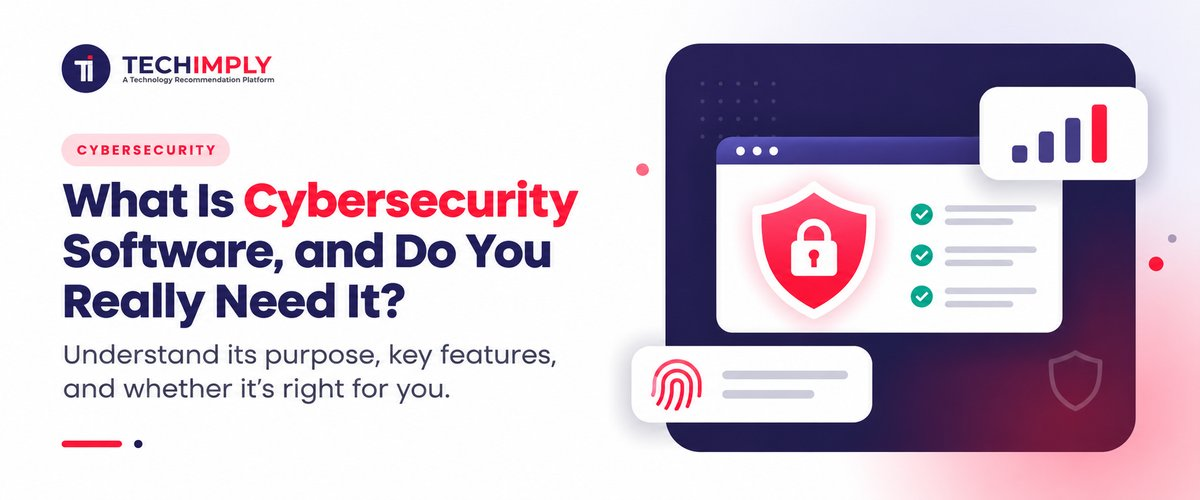
Cybersecurity software is the name given to software tools, such as anti-viruses, firewalls, and other similar tools, which are specifically designed to monitor, protect hardware, and provide security to data against cyberattacks through malware, ransomware, and phishing. With India growing in leaps and bounds in terms of technology, due to UPI payments, cloud computing, and working from home, it has become a necessity for cybersecurity software to be present at all times. In fact, considering how India has now emerged as one of the main targets for sophisticated cyberattacks around the world, and in light of the stringent compliance laws in India's Digital Personal Data Protection (DPDP) Act, using only standard device protection software is no longer enough.
What is cybersecurity software in the Indian digital landscape?
Cybersecurity software in India includes specialized software solutions that help in monitoring networks, safeguarding hardware, and ensuring the safety of critical information from any kind of threat by employing applications like antiviruses and firewalls along with EDR, identity management, and cloud security systems. With India witnessing a fast digital revolution due to high internet penetration, integration of UPI systems, and heavy adoption of cloud systems by businesses, the role of cybersecurity software becomes very critical for protecting businesses and people against digital threats. The cybersecurity software actively monitors digital communication, avoids financial fraud, protects critical information, and counters cyber threats such as artificial intelligence phishing, ransomware, and Trojan attacks.
With the Indian digital ecosystem of today, the use of cybersecurity software has become much more of a necessity than a cost of IT services that companies and even individuals can opt out of. With India regularly topping the list of countries targeted by advanced cyber criminals, the basic level of built-in OS security measures has proven inadequate for countering highly personalized mobile banking fraud, threats within the supply chain, and network vulnerabilities. In addition, compliance with the laws of the Digital Personal Data Protection (DPDP) Act and CERT-In necessitates the maintenance of rigorous standards of data protection and breach notification.
Did you know?
That the number of cyberattacks faced by India stands at more than 29 lakh (2.9 million) per year, with security agencies discovering a whopping 505 malware attacks every single minute? With the rapid rise in digitalization in the country, where more than 400 million users transact with the help of UPI, India has emerged as one of the top countries in the world to be attacked by AI-powered phishing, mobile banking frauds, and financial frauds. In fact, the loss in India due to digital financial frauds rose to ₹19,800 crore in a single year, with SMS-based banking frauds increasing by as much as 146%. With data protection laws in force through the DPDP Act, cybersecurity software is mandatory for all smartphones, computers, and businesses in the country.
Why is cybersecurity software becoming important in India?
India's swift adaptation to a digital-first economy has revolutionized the manner in which Indians work, spend, and transact with money. The need for effective cybersecurity software is therefore paramount. India's digital presence has grown by leaps and bounds, considering that over 400 million people in India use UPI for their daily transactions. In addition, many companies are shifting to cloud computing , hence increasing the level of connectivity to the Internet. This has created attack vectors that make Indians' smartphones and personal computers highly susceptible to digital attacks.
Sophisticated cybercrime has become rampant in India; therefore, basic built-in security measures are not sufficient in keeping Indians safe from cyberattacks. There is an increase in threat actors carrying out phishing scams, ransomware attacks, and installing malware on people's phones and computers. This has made it necessary to have cybersecurity software operating in the background because scanning a QR code, opening an attachment, or even clicking on links could cost people a lot of money.
In addition to personal safety measures, the stringent regulatory requirements of India make cybersecurity solutions an absolute necessity for all business organizations. It is the obligation of the firms to safeguard the data of their clients, to keep track of the activities on the network, and inform the authorities about any cyber-attack immediately under the DPDP Act and CERT-In rules. Usage of cybersecurity tools will make sure that Indian firms adhere to these regulations.
What Common Cyber Threats do Indian users and Businesses Face?
Individual Internet users and companies in India face their own set of cyberattacks aimed at exploiting cash, private identity information, and technological resources:
- UPI & Digital Payment Attacks: These attacks make use of India's dependence on digital experience by employing QR codes, collect request scams, and fraudulent banking websites to steal money or force people to reveal their PINs.
- Artificial Intelligence-Based Phishing & Social Engineering Attacks: Criminals resort to artificial intelligence tools for natural language processing, smishing (SMS phishing), and deepfakes in order to create convincing impersonations of banking services, government organizations, or corporate heads.
- Android-Based Malware & Malicious Applications: Trojans, banking apps, and adware that appear in the guise of utility applications steal user contact information and OTP messages from the victims' phones.
- Ransomware/Double extortion attack: Malicious entities hack into the organization’s network, lock down the business files, and steal confidential data while demanding ransom payments with a threat of publishing sensitive data on the internet if the ransom is not paid.
- Third-party/Supply Chain Risks: Malicious entities launch an attack on small-scale enterprises or third-party vendors that lack sufficient cybersecurity to gain secondary access to the enterprise networks.
- Cloud Storage/Services Risks: Malicious entities access unsecured cloud storage, unencrypted databases, or insecure APIs, which results in exposing the private data of the company remotely.
- Insider threats/Data leakage Risks: Human error, poor password policies, or data theft by employees result in data breach risks for the company.
How does Cybersecurity Software Protect Dvices and Data?
Today's cybersecurity software acts as a multi-level active protection that identifies and counteracts possible risks both in personal devices and enterprise networks. Rather than providing mere passive storage security, today's advanced security software incorporates real-time scanning capabilities, network/web traffic management, and even encryption and authentication mechanisms:
- Real-Time Malware Protection: Scans for malware in files/downloads and in the network traffic coming from the internet, based on file signatures and their behavior.
- Filtering Network/Web Traffic: Provides both directions firewall and DNS filtering for network traffic scans and to limit/block suspicious websites and payment gateways.
- Zero-Day Threats Detection by Using Artificial Intelligence: Artificial intelligence based algorithms will help to identify normal activities performed by the system/user; as a result, zero-day attacks can be identified.
- Data Loss Prevention / Data Encryption: Encrypt sensitive information saved in files and prevent the transfer and sharing of information.
- Anti-phishing & Identity Shielding: Detects fraudulent email attachments, texting links, and suspicious websites as well as provides a secure login session in order to avoid the theft of credentials.
- Vulnerability Audit and Patch Management: Examines the operating system and applications for vulnerabilities and installs patches automatically to close them.
Do small businesses in India really need cybersecurity software?
However, dedicated cybersecurity software solutions are required for small businesses in India (SMEs and MSMEs). These smaller companies are specifically targeted by cybercriminals since they usually do not have many defense mechanisms in place, making them an easy target or a backdoor into bigger supply chains.
- Primary Targets of Cybercriminals: Hackers know that there are no specialized IT security departments within small businesses. Thus, micro and small businesses become a huge proportion of successful attacks and experience high rates of ransomware and phishing.
- Protection of Digital Payment Channels: With Indian small and medium businesses extensively using such payment instruments as UPI, net banking, and digital wallets for transactions with vendors and customers, their endpoint devices (laptops and phones) can become victims of payment-tampering malware, credential theft, and fake QR code attacks.
- Security of Customer/Financial Data: A ransomware attack or a data breach can jeopardize all business proprietary data, including GST declarations and personally identifiable information of customers. Restoration of the database will take days or even weeks with no automated security tools and backup solutions.
- Mandatory Regulatory Compliance: The Digital Personal Data Protection (DPDP) Act in India compels any firm handling customers' data to adopt technical controls. Additionally, according to CERT-In regulations, any cyber incident needs reporting and log maintenance. Not having security measures would mean the firm is subject to regulatory penalties.
- Vendor and Supply Chain Requirements: Large enterprises that deal with Indian suppliers and other small and medium-sized enterprises (SMEs) increasingly require the latter to have minimum security measures. Adopting security software helps protect the supplier-client relationship and also stops hackers from using the SME's system to access bigger clients.
What Features should Indian Buyers look for in Cybersecurity Software?
- SMS & Phone Scam Prevention (Anti-Smishing): Instantaneous detection of any scam that may include any suspicious link via bulk SMS, phishing scam through false banking messages, and false identity transmission of telephone calls in an effort to steal OTPs.
- AI-Based & Behavioral Threat Detection: Threat hunting systems that are capable of detecting zero-day malware, AI-based phishing links, and fileless ransomware attacks.
- Mobile OS Security - Lightweight: Protection with very low overhead for the mobile OS, including scanning of malware in APKs, protecting against permissions abuse by any malicious applications, and protection against data theft using background processes.
- DPDP Act & Compliance Assistance: Discovery and encryption of data, local data residency, and logging of data securely to help organizations comply with CERT-In and DPDP Act regulations.
- Anti-Ransomware and Proactive Rollback: Automatic folder protection features that prevent unauthorized file encryption and enable users to easily restore any tampered files to their original state through one-click solutions.
- Minimal Use of System Resources: The use of optimized scanning methods that ensure maximum device performance even on budget-midrange systems without slowing down the entire system in the process of updates.

Pro-tip
Seek out security solutions that have localized support along with servers located within India and round-the-clock customer service available within the region. Security solutions using locally hosted cloud infrastructure ensure faster real-time threat information and guarantee that all sensitive operational telemetry stays within Indian data territories.
Is Cybersecurity Software Worth the Cost in the Indian Market?
1. Asymmetry of High Cost of Recovery Compared to Cost of Prevention
- Low Upfront Investments: Per-user licenses to protect a company’s computer network from cyber risks cost anywhere between ₹500 and ₹2,500 a year, whereas advanced EDR solutions for large companies cost a mere fraction of total IT expenses per user.
- High Cost of Breaches: According to the Cost of a Data Breach Report by IBM, the average cost of a company’s data breach in India has hit its peak at ₹25.5 crore. Even for micro-businesses, the losses due to fraud in the unified payment interface, ransomware, or hacked bank accounts may amount to tens of thousands to lakhs of rupees.
2. Business Benefits in the Form of High ROI
- Operational Sustainability: In case of ransomware attacks, hackers lock operational databases and restrict access to the administration tools. Security software prevents such unauthorized encryption from taking place and ensures no downtime that would otherwise cost the business dearly.
- Protection from Heavy Legal Penalties: Non-implementation of reasonable security measures as provided in India’s DPDP Act is associated with substantial legal penalties. Thus, using certified security software allows for avoiding heavy legal fines.
- Protection from Contractual Penalties: Enterprise-level clients usually demand that
3. Protection from Localized, High-Frequency Scams
- Protecting Daily UPI Payments: Free or default operating systems may fail to detect localized scams based on social engineering techniques. Anti-virus packages with specialized web-protection features will recognize fraudulent payment gateways and collect requests before money gets transferred out of one's account.
- Blocking Phishing & OTP Theft Attempts: Smishing (malicious SMS campaigns) and artificial intelligence-powered phishing email scams designed to bypass basic protection are a regular occurrence for Indian banking customers. Enterprise-class paid security products will scan every incoming link and block any attempt at data theft.
Conclusion
In the age of highly sophisticated cyber threats, securing your IT infrastructure with a proper defense mechanism has ceased to be optional it is the cornerstone of any modern business. Choosing the optimal security product can be a daunting task with so many enterprise security solutions on the market. This is when services like Techimply become useful. Techimply makes your search for software easier by providing you with an opportunity to easily discover, compare, and purchase any business software that suits your needs.