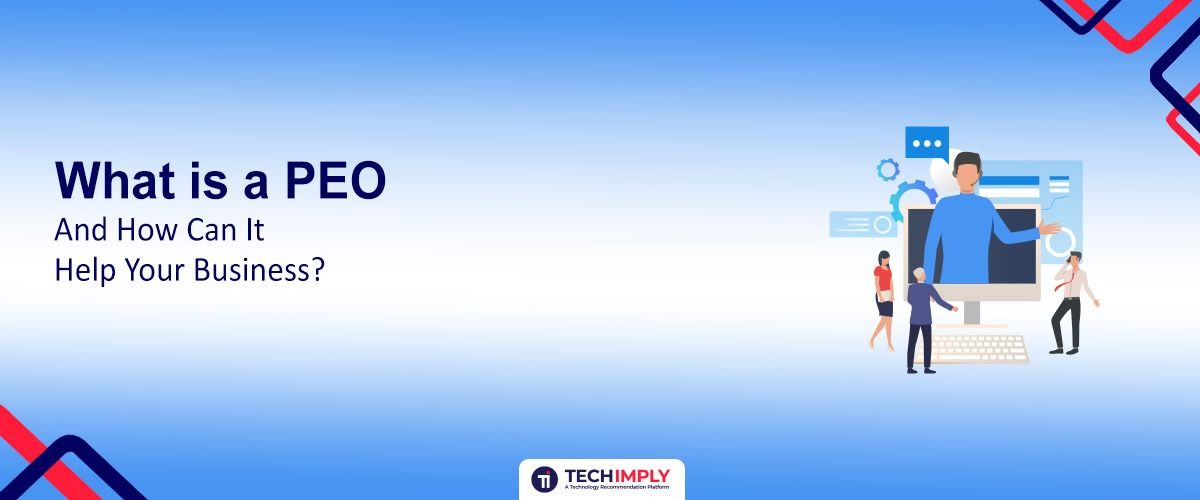
A business is a combination of your mission with a great deal of administration. From managing payroll to navigating complex labor laws, the operational side of a company can quickly become overwhelming. This is where many leaders ask, What is a PEO? A Professional Employer Organization (PEO) acts as a strategic partner that handles human resources, benefits administration, and compliance through a unique arrangement known as co-employment.

Looking for PEO Software?
Check out Techimply's List of the Best PEO Software in India for your business.
Understanding the PEO meaning is the first step toward reclaiming your time. In simple terms, a PEO becomes the employer of record for tax and insurance purposes, while you maintain full control over your team's daily work and business operations. This partnership allows small and mid-sized businesses to access high-quality benefits usually reserved for massive corporations. If you have been searching for a way to streamline your HR infrastructure, learning what is a PEO will reveal a path towards sustainable and scalable growth.
What is a PEO?
The PEO full form stands for Professional Employer Organization. At its core, it is a firm that provides comprehensive HR services to small and medium-sized businesses (SMBs). When you enter into a partnership with a PEO, you sign a co-employment agreement. This means the PEO handles the paperwork side of employment, like taxes, payroll, and workers' compensation, while you handle the productivity side, such as hiring, firing, and managing your staff.
In a formal PEO definition, it is a service provider that integrates with your business to manage all employee-related liabilities. While the term is most common in the business world, you might occasionally see the PEO full form in education, where it refers to Program Educational Objectives, a set of goals that describe what graduates are expected to attain within a few years of graduation.
How Do PEOs Work, and Why Are Businesses Using Them?
PEOs work on the basis of economies of scale. Through the pooling of thousands of employees of different small companies, the professional employer organization is experiencing massive bargaining power with the insurance providers and the vendors. This enables them to negotiate cheaper health insurance rates as well as 401(k) plans that an individual small business would have never negotiated by itself.
The regulatory environment is becoming more complex every year, and this is the reason why businesses are turning to these organizations. A PEO takes care of the administrative load, making sure that payroll tax returns are filed properly and the business is in line with the constantly evolving labor regulations. In effect, they offer a Fortune 500 HR department to companies that are not that large yet.

Do You Know?
The National Association of Professional Employer Organizations (NAPEO) reports that, in comparison, the small businesses that employ a PEO increase by a factor of 7-9% and experience 10-14% lower employee turnover than those that do not.
What are the Different Types of PEOs?
Not every professional employer organization is built the same way. The PEO software market size was valued at USD 29.37 billion in 2024 and is projected to reach USD 67.69 billion by 2031, growing at a CAGR of 11% from 2024 to 2031. Depending on your needs, you might encounter different variations of this model:
- Certified PEOs (CPEOs): These are organizations that have met the rigorous background and financial reporting requirements of the IRS. Choosing a CPEO provides certain tax certainties and protections for the client.
- Accredited PEOs: These are vetted by independent bodies like the Employer Services Assurance Corporation (ESAC) to ensure financial stability and ethical practices.
- Industry-Specific PEOs: Some PEOs specialize in certain niches, such as technology, healthcare, or construction, offering specialized compliance advice tailored to those fields.
- Administrative Services Organizations (ASO): While similar, an ASO does not use the co-employment model. They handle HR tasks, but the tax liability remains entirely with you.
Which Types of Businesses Benefit the Most from Using PEOs?
Although HR outsourcing can benefit virtually any organization, some areas are particularly characterized by high PEO meaning and utility:
- Startups: Fast-expanding firms will require a way of recruiting as fast as possible without worrying about the legalities of establishing HR departments in new states or countries.
- Small to Mid-sized Businesses (SMBs): A company with 10 to 200 employees will not usually have the finances to pay a full-time, in-house HR team.
- Non-Profits: Unlike for-profit organizations, these typically have small budgets and must get the most out of the funds allocated to benefits in order to retain talent.
- International Firms: In case you are going global, PEO service firms in India or other hubs can assist you in recruiting local talent without the necessity of creating another legal entity at any immediate time.
What Does a PEO Really Cost?
PEOs are priced in different ways, but the most common way is to charge in one of two ways:
|
Pricing Model |
Description |
Best For |
|
Percentage of Payroll |
The PEO takes a fixed percentage (usually 2% to 12%) of your total monthly payroll. |
Companies with varying salary levels or lower-wage staff. |
|
Per Employee Per Month (PEPM) |
A flat fee for every employee on your payroll (usually $40 to $150 per head). |
Companies with high-earning employees where a percentage would be too expensive. |
On top of these fees, there are also the charges of the actual benefits and insurance premiums. But the administrative fee of the PEO is usually compensated by the savings made by the lower insurance rates.
PEOs Advantages and Disadvantages for a Business
-
Advantages of PEOs
1. Saving Costs and Improved Benefits
A PEO provides premium health, dental, and vision insurance. They can provide significantly lower rates than would otherwise be available in the open market because the PEO is able to bundle thousands of employees together, as a small business would not.
2. Reduced HR Burden
Your employees probably waste hours each week doing payroll, taxes, and benefit enrollments. These tasks are automated and managed by a PEO, so they are no longer necessary, as the internal staff can dedicate time to the strategic projects.
3. Compliance & Risk Management
Employment laws keep evolving. PEO is a guarantee that you are in line with local, state, and federal laws to save you the burden of expensive court cases or penalties. Workers' compensation and unemployment insurance are also dealt with by them.
4. HR Expertise
You have access to a team of specialists who will assist you in employee handbooks, performance management, and conflict resolution. This mastery is priceless in the face of delicate issues in the place of employment.
5. Improved Recruitment
You can be a more attractive employer by providing them with better perks and a more professional onboarding experience. This assists you in competing with bigger organizations in regard to the best talent.
6. Scalability
The PEO increases in size with you. It does not matter whether you are employing five workers or five hundred; the infrastructure is similar. This is the reason why most people seek the full form of peo when they experience their first growth spurt.
-
Disadvantages of PEOs
1. Loss of Control
The PEO is the co-employer; hence, they might demand that you adhere to certain HR policies or utilize their own software systems. This change of control is not comfortable for some business owners.
2. Limited Customization
The PEO has negotiated some benefit plans to which you are frequently bound. PEO may not be able to meet that request in the event you want a highly specific and niche insurance provider.
3. Potential for Higher Costs
In the case of a very small team and low benefit requirements, the administrative fee of a PEO can supersede the savings. Before signing, it is necessary to conduct a cost-benefit analysis.
4. Cultural Mismatch
PEO might have a strategy on how it handles its employees that is too businesslike and strict for your startup culture of an organization, which may lead to some tensions in the course of onboarding and running.
5. Customer Service Issues
You are actually outsourcing a sensitive section of your business. In case the customer care of the PEO is slow, your workforce may get irritated when they face a problem with their paycheck or benefits.
6. Co-employment Confusion
The workers may be confused about who their real employers are. There is a need to communicate clearly that you are still in charge of their work, and the PEO takes care of the administration.
Pro Tip:
Before signing with a PEO, always ask for a benefit comparison. Compare your current insurance premiums and administrative costs against their proposed rates to see the literal ROI on paper.
Conclusion
Understanding what is a PEO is a game-changer for any business owner looking to scale. By leveraging the power of co-employment, you can provide your team with better benefits, ensure your business stays compliant, and eliminate the tedious paperwork that slows down growth. While there are considerations regarding cost and control, the advantages often far outweigh the drawbacks for growing companies. If you are ready to modernize your HR, exploring PEO service providers in India or your local region is a proactive step toward a more efficient future.