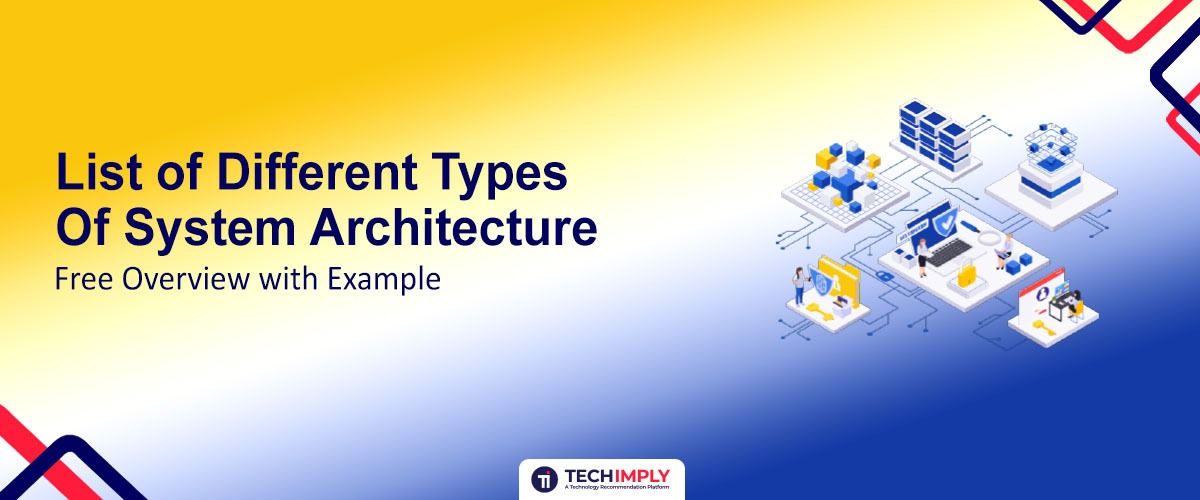
The hardware, software, and networks of various system designs are organized in a variety of different ways in order to satisfy the requirements for performance, scalability, and reliability. Peer-to-peer, client-server, event-driven, layered (n-tier), microservices, and monolithic setups are some examples of patterns that are used to address specific demands. These patterns range from ordinary web applications to enterprise-scale different types of system architecture, and information flows in real time.
What Is System Architecture?
Architecture software is the blueprint that outlines how a system's components like hardware, software, and networks, fit together to work efficiently. Think of it as the skeleton of any tech setup, from a simple app to massive enterprise systems. In India, where startups and IT giants like Infosys or TCS build scalable solutions on tight budgets, it ensures reliability amid rapid growth and diverse user needs.
Indian projects often favor practical architectures like layered or microservices to handle changing requirements and legacy integrations common in BFSI or e-commerce sectors. For instance, monolithic setups suit early-stage apps in places like Bengaluru's startup ecosystem, while distributed systems shine for high-traffic platforms like Flipkart during festive sales. This approach keeps costs low and scaling easy, reflecting desi developers' focus on "jugaad" efficiency.
Beyond software, system architecture touches embedded systems in IoT devices for smart cities in Ahmedabad or Mumbai, and information systems for HRMS payroll—key in India's compliance-heavy job market. It evolves with trends like cloud-native designs on AWS or Azure, helping firms manage multimedia or event-driven flows. Ultimately, good architecture prevents downtime and boosts performance in our high-stakes digital economy.
Different Types of System Architecture
1. Monolithic Architecture
All of the components are deeply integrated into a single codebase and deployed simultaneously, making it an excellent choice for applications of a smaller scale. From the beginning of the 2000s, Amazon began using this for its retail website before expanding its operations. Although it makes initial development easier, it may act as a barrier to expansion as traffic increases.
For example, Instagram initially utilized a monolithic design to manage its platform for sharing photographs.
2. Client-server Architecture
In online applications, it is standard practice to have a central server manage requests from various client devices. Flipkart's e-commerce backend is built with this, which allows the company to separate user interfaces from data processing. While this configuration improves centralized control, it also risks failures at a single point.
Facebook, for example, takes advantage of technology in order to provide material to billions of people.
3. (SOA) stands for "service-oriented architecture."
Using established protocols, services communicate with one another, which encourages reusability across different systems. In order to integrate their historical core banking systems with contemporary application programming interfaces (APIs), Indian banks such as HDFC use service-oriented architecture (SOA). When applied in business settings that contain a variety of technology stacks, for example, eBay, for instance, employs SOA to handle its extensive e-commerce operations.
4. Microservices Architecture
Small, independent services are responsible for specific functions and grow independently using application programming interfaces (APIs). In response to the rapid expansion of its user base, Netflix made the transition to this streaming service. It is utilized by businesses such as Zomato in India for the purpose of order processing and tracking of deliveries.
For example, utilizing microservices, for instance, allows Netflix to provide tailored suggestions and streaming services.
5. (EDA) stands for event-driven architecture
Appropriate for real-time applications, components respond to events in an asynchronous manner. EDA is utilized by Uber for the purposes of ride matching and notification. As part of India's financial technology landscape, Paytm utilizes it to send transaction alerts.
For example, Uber, for instance, leverages EDA to instantaneously connect drivers and riders with one another.
6. Layered Architecture
The code is organized into layers such as display, business logic, and data access with this feature. For the purpose of achieving a clear distinction in payroll systems, TCS creates an enterprise HRMS using this. Compliance-heavy Indian companies benefit from increased maintainability as a result. For example, banking applications frequently make use of this.
7. The architecture known as peer-to-peer (P2P)
By performing the functions of both clients and servers, nodes decentralize control. For example, BitTorrent is largely responsible for its popularity; blockchain applications like Polygon use it for scalable transactions in India. Superb for ensuring resilience in the absence of central servers.
8. TPipe-and-filter Architectures
Architectures based on Pipes and Filters
Like a pipeline, data is processed through many phases. Image editing programs such as Photoshop make use of filters in a sequential fashion; Indian multimedia companies implement this technique for video streaming applications. Streamlines the process of transforming modular data. For example, compilers such as GCC make use of this for code translation.
9. Event-driven Messaging Architecture
Much like EDA, it makes use of message brokers in order to achieve loose coupling. Kafka is the platform that Spotify uses to provide playlist suggestions. During busy hours, Swiggy makes use of it to provide them with real-time order updates.
For example, Slack makes use of this for messages in real time.
10. Hybrid Architectures
Combines a variety of styles to produce individualized solutions. Indian startups like PhonePe combine microservices for payments and compliance with layered authentication. Social media combines microservices for feeds with tiered authentication. It provides unparalleled versatility.
For example, Amazon employs a combination of microservices, service-oriented architecture (SOA), and enterprise data architecture (EDA) to achieve scalability and efficiency.
Emerging Trends in System Architecture for 2026
The demand for scalability, efficiency, and innovation is driving the ongoing evolution of system design as we go forward into the year 2026. The design of distributed systems is currently at the forefront, making it possible for organizations to manage large amounts of traffic and to analyze data in real time.
This strategy is being utilized by heavyweights of the Indian IT industry, such as Flipkart and Paytm, in order to guarantee uninterrupted user experiences during times of high demand, such as during holiday sales or to facilitate financial transactions. Applications such as Internet of Things (IoT) in smart cities and driverless cars can benefit from cutting latency thanks to the proliferation of edge computing, which further complements distributed systems.
Not only that, but embedded systems architecture is also gaining popularity, particularly in India's expanding Internet of Things environment. The implementation of these architectures is making it possible to implement localized and effective solutions, which range from smart home gadgets in urban centers to agricultural automation in rural regions. In order to be able to cater to a wide variety of use cases, such as industrial automation and healthcare wearables, businesses are concentrating on designing products that are both lightweight and energy efficient. This trend is in line with India's efforts to promote "Make in India" programs, which are aimed at stimulating innovation in the combination of hardware and software.
Furthermore, multimedia architecture is causing a substantial shift in the manner in which material is distributed and consumed.
As over-the-top OTT platforms and gaming continue to grow in popularity, Indian companies are embracing cloud-native designs in order to improve the quality of video streaming and interactive experiences. The design of information systems is also developing in order to fulfill the compliance-heavy expectations that are being placed on industries such as healthcare and BFSI. With the integration of artificial intelligence and machine learning, these architectures are making it possible for organizations to provide personalized services and predictive analytics, therefore guaranteeing that they remain competitive in an industry that is quickly digitizing.
Challenges in Implementing Scalable System Architectures
The implementation of scalable system designs in India has its own distinct set of obstacles, particularly in the area of distributed system architecture. Organizations such as Flipkart and Zomato, which are dependent on real-time operations, have a significant challenge in the form of managing data consistency and latency among nodes that are located in different geographic locations. Additionally, the expense of maintaining high availability and fault tolerance in distributed systems can put a burden on budgets, particularly for startups operating in India's highly competitive technology industry.
The design of embedded systems is fraught with its own set of challenges, particularly in Internet of Things-driven industries such as industrial automation and smart cities technologies. It is a huge challenge to design systems that are sustainable in terms of energy consumption, secure, and interoperable, particularly when catering to a wide variety of use cases across India's urban and rural areas. Furthermore, the absence of competent people in the field of embedded system development is frequently a factor that slows down the timeframes for innovation and implementation.
In industries such as banking, finance, and insurance (BFSI) and healthcare, the design of information systems must take into account compliance with tight laws while also assuring scalability. The procedure of integrating historical systems with contemporary designs is a challenging endeavor that frequently results in delays and additional expenses. Companies run the danger of falling behind in a digital economy that is constantly developing if they do not engage in proactive planning.
Role of Cloud-Native Architectures in Digital Transformation
The adoption of cloud-native architectures in India is bringing about a revolution in digital transformation by providing organizations with the ability to expand swiftly and innovate effectively. Companies such as Paytm and Swiggy are able to manage huge amounts of user traffic at peak periods because of the distributed system design that plays a crucial part in this change. By utilizing containerization, these designs provide fault tolerance and smooth scalability, both of which are essential for real-time applications in industries such as e-commerce and finance.
Architectures for embedded systems are also benefiting from cloud-native designs, particularly in businesses that are driven by the Internet of Things (IoT). Data from millions of linked devices is processed and analyzed using cloud-native systems, which are utilized by smart city initiatives in India. Some examples of these programs are those in Pune and Ahmedabad. Because this method decreases latency and improves decision-making, it is ideally suited for applications such as energy efficiency and traffic control.
Information system architecture is changing with cloud-native solutions in compliance-heavy industries such as the banking, financial services, and insurance industry (BFSI) and healthcare in order to fulfill regulatory standards while maintaining agility. Hybrid cloud solutions are being adopted by financial institutions such as HDFC and ICICI in order to merge historical systems with contemporary, scalable platforms that are scalable. As a result, they are able to provide tailored services and real-time analytics, therefore improving the overall client experience while preserving the confidentiality of their data.
Cloud-native designs are also pushing a revolution in the field of multimedia architecture, which is another sector. Tools that are native to the cloud are being utilized by over-the-top (OTT) platforms such as Hotstar and gaming firms in order to enhance user engagement and optimize content delivery. These platforms provide high-quality streaming even in locations with irregular internet access by utilizing distributed systems and edge computing. This allows them to appeal to India's diversified consumer base.
Conclusion
Tech companies in India, ranging from startups to heavyweights in the financial industry, are able to prosper by adapting their architectures to meet needs such as high traffic and restrictions. Small apps are launched by monoliths, whereas giants like Zomato are powered by microservices during high seasons, and hybrids assure compliance with BFSI regulations. EDA and P2P are preferred by cloud shifts because of their cost-saving scalability. By combining global designs with high-volume requirements, local innovation will be the driving force behind sustained digital growth in 2026.