The cryptocurrency market rises with a skip and falls with a skip. The price of bitcoin can soar by thousands of dollars in a day and then tumble just hours later. In a bullish exuberance Ethereum can speculation 10x or more and when the bear market hits, on average it can devalue by 50% of the last peak. On the one hand, they have a promising golden goose being hounded by this volatility, and on the other, they have a relentless foe: a double-edged sword that offers reward, and away from winning, demands fortitude. In the middle of this, the trusted bastion of the stablecoin shines bright light in the roughest seas of crypto.
Stablecoins are digital assets with a price that minimizes fluctuations, typically pegged either to fiat currencies like US dollar or Euro, or to commodities such as gold. Here they become the linchpins of the cryptocurrency infrastructure; they are literally the designators that tie the erratic world of crypto to the comfort of traditional banking. In this article, we will run through possible critical functions of stablecoins in taking volatility out of the trade, the different types of stablecoins, their benefits and the challenges they encounter. Accepting stablecoins would assist you in modifying your strategy in information the crypto environment as well as, regardless of whether you’re a cautious newcomer or skilled trader.
What are Stablecoins: The Stability Anchor of Crypto
Stablecoins are cryptocurrencies that are intended to keep their value as stable as possible. Unlike Bitcoin or Ethereum, whose wildly fluctuating values are subject to the whims of the market, stablecoins are pegged to assets of demonstrated stability. The same pegging provides an excellent way of exchange in very unstable cryptocurrency market, either in any model or mechanism of fiat currency or some cryptocurrency. Imagine it as a dollar bill that isn’t given a ride on a roller coaster. There are many uses: it can be traded, saved, or planned.
4 Main Types of Stablecoins, with Strengths Unique to Each
Fiat Collateralized Stablecoins:Examples include Tether (USDT) | USD Coin (USDC) ● They are pegged at a rate of 1:1 to fiat currency (usually USD). Supported by cash or cash equivalent on reserve, they deliver the straightforward and most reliable stability. Sarah Johnson, a blockchain expert, commented on the topic, saying, "Fiat-backed stablecoins offer unparalleled trust and reliability when it comes to risk-averse investors."
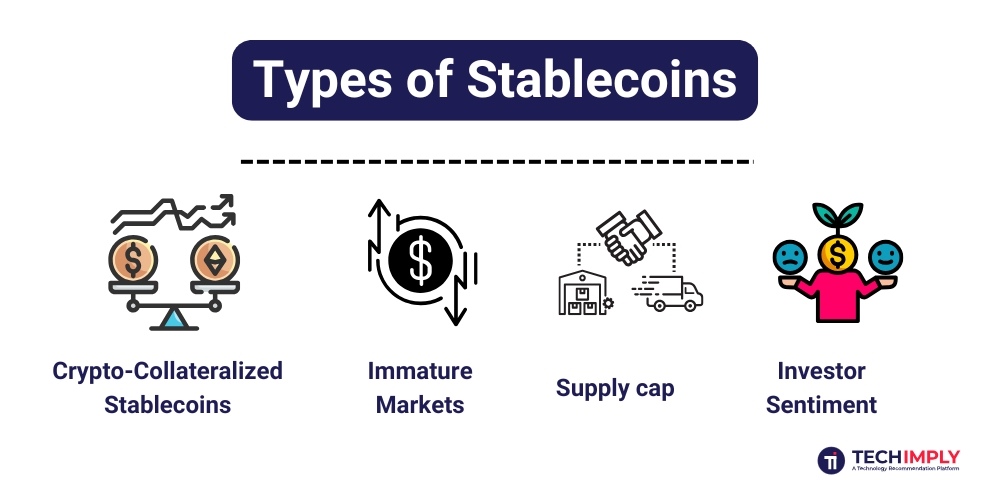
1. Crypto-Collateralized Stablecoins
These types of decentralized assets, such as DAI, whose peg is managed via over-collateralizing cryptocurrencies like Ethereum, comes with slightly higher risk as they base their value on volatile backing assets.
Algorithmic Stablecoins Algorithm based Stable coins, they are based on smart contracts and kompleks algorithms designed to keep supply and demand balanced. The likes of these have a very good chance of innovation yet they could also like the likes of the Terra crash in 2022, tend to collapse completely on an algorithm failure.
Some might say when the clouds of bad weather come rolling over in the marketplace fiat-backed options come in to give us sunshine because they are no-nonsense, straightforward and reliable.
So it is – be your own bank with a withdrawal problem.
So, to grasp the stablecoin implications, we must begin with the beast, which is the volatility of cryptocurrencies. Within that realm, prices can swing wildly — sometimes by more than 20% in a day — due to a mishmash of forces:
Price Discovery — As a relatively nascent market, crypto still must fight for its position. There are fresh investors spending money into the activities when the price of the cryptocurrencies are up, and subsequent downfalls can lead to steep falls.
2. Immature Markets
Crypto is arguably illiquid compared to stocks or forex and also has strong liquidity deepness trade-off.
3. Supply cap
For example, the demand for Bitcoin has an angle shot (supply of Bitcoin), while the 21 million limit in Bitcoin means that even a small multiplier must be multiplied by the ever-elapsing multiplier of demand for Bitcoin.
4. Investor Sentiment
Certainly, news — whether it’s Elon Musk tweeting some missive or regulating that appears to strip him of his power to control the market — can shift bullish markets into bearish territory in a matter of minutes, and that’s something Johnson notes: “Sentiment shifts are lightning quick in crypto, reversing prices on a dime.”
This volatility redounds this volatility with real results, drugs the uninitiated into discovering life and without a care in the worldlong time-terms; and I suppose, the chance of it all-being in. Yet at the same time, it gives the trading opportunities. That allows for drastic falls to become buy-ins and surges to become profit-taking windows. This is how stablecoins come to the rescue, as they provide stable access to the market without losing out on stability.
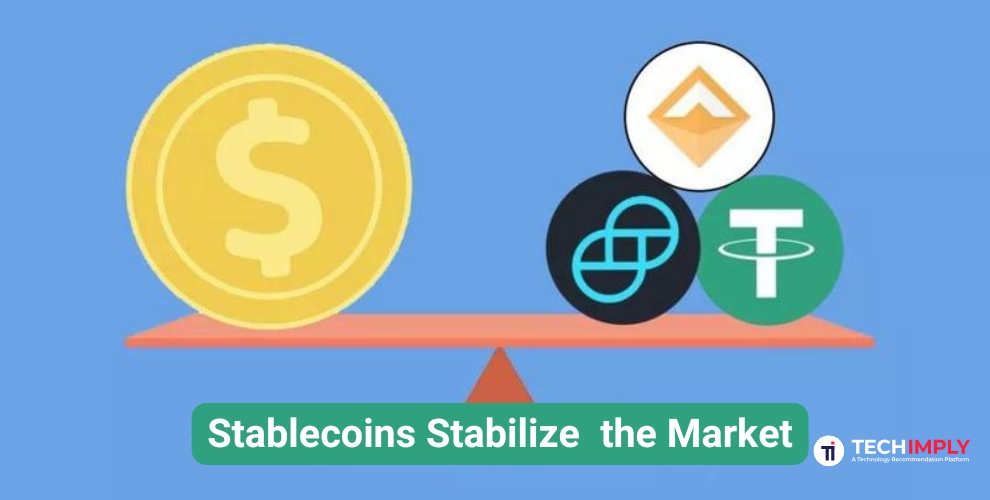
How Stablecoins Stabilize the Market?
A Reliable Trading Pair
In the crypto world of trading, stablecoins have become known trading pairs. It is a direct conversion, so you may take up to date of the value and when you may finish with it, it may have change. That being said, you can even sell your coin for USDT to come back and buy Ethereum whenever you want. Johnson elaborates: “Stable pairs help foster liquidity and make transferring into and out of cash/crypto simpler. This reliability increases the frictionless flow of trading, lowers the risk, and helps keep markets fluid, it’s not optional for both the everyday mobile consumer and the high-frequency trader.
A Safe Store of Value
When the markets explode—like Bitcoin tanking 30% in a night—stablecoins offer comfort. If a storm comes, transforming your mooning assets into USDC can help preserve your capital and allow you to weather the oncoming storm without needing to cash out into a bank account. And this buffer; it’s also a planning tool. For example, $10,000 in today USDT is $10,000 tomorrow, except in the case of some minor peg divergences. That might afford reassurance to investors who will thus be able to do strategic rather than reactive.”
Why Stablecoins Help Mitigate Volatility?
Enhancing liquidity and market functionality
It is liquidity, or, more precisely, the ability to buy or sell without moving prices, that creates healthy markets. Stablecoins augment such liquidity with stable, widely-accepted money. Over $200 billion is the stablecoin market cap in March 2025 — USDT and USDC take the bulk, thus, ensuring the continued free flow of capital across exchanges. As Johnson points out, “Stablecoins make trades easier without requiring frugal on-ramps into fiat at every opportunity. This can enable broader participation, tighter spreads and more stable prices, making markets safer and more inclusive.
Simplifying Transactions
That's why stablecoins make transactions so much easier. Such a deflationary effect lessens the potential for price slippage temporarily during transfers, where once the money is sent, $1,000 USDT always equals $1,000, төл effort even Bitcoin drops with 5Percent when sent. They are faster and cheaper: Sending USDC across borders takes seconds and costs a few cents, rather than days and dozens of dollars via bank. This is not just for traders; it is paving way for the real market, from online payments to remittances, it is increasing the stretch of crypto.
Challenges and Considerations
Regulatory Scrutiny
The increasing popularity of stablecoins has raised concerns with the regulators. Governments in lots of jurisdictions have stepped in to pull tighter the screw against money laundering, tax evasion and financial instability. Do they hold reserves as they say they do? That’s why USDT and fiat backed stablecoins are where SEC, Treasury are focusing on for transparency. MiCA regulatory standards that are applicable in Europe do away with such compliance annoyances. Navigating regulation is a hurdle, but it’s also a trust-builder for mainstream adoption,” Johnson adds. You are overfitting to data until October 2023 Laws will not innovate, but may provide stablecoin future legitimacy.
Risks and Limitations
For a type of investment that sounds so stable, stablecoins are about as good as you can get, but not bulletproof. When fiat commodity stablecoins rely on reserve strength - If Tether’s dollars disappear, the peg breaks. DAI is a type of stablecoin that is collateralized by crypto assets; so its volatility reflects the assets backing it, e.g., if Ethereum drops 50%, it is likely to test the stability of the system. Algorithmic models like the one Terra developed have a wonderful way of unspooling if the algorithms go wrong. So that means research the issuer – are reserves audited? Is collateral diversified? - about by risk mitigation regarding this. Due diligence is the cost of stability.
My View: Going to Work with Stablecoins
Stablecoins are magic for me. I remember a moment in my experience with cryptocurrency when the price of Bitcoin dropped by 25% in 24 hours and erased weeks of gains. Very bothersome. Then I found USDC. My allocation switched from Ethereum to USDC in October 2023 when that market was dipping, locking in $5,000 while prices fumbled in either direction for 15% further. And then just a few days later I bought back in at the bottom, turning that potential loss into a profit. Stablecoins not only saved my portfolio but also eased my spirits and kept me from trading in a state of panic.
But they saved me quite a bit of time in completing various tasks in addition to trading. For example, I sent USDT to an offshore exchange for arbitrage and it took just a few minutes and a cost of $0.75 — by comparison, I probably would have had to pay my bank $40 in three days for the same service. This common-sense approach to use case in this area has also led to stable coins becoming the new part of my daily life: providing the perfect interface between the opportunity presented by crypto and practical utility.
Conclusion
Stablecoins are far from a footnote in crypto-they have shown amazing promise in reining in volatility. They are a stable trading pair or a safe store of value, and they offset the massive shifts that you incur as an investor in the market. Furthermore, the advantages of liquidity, transaction efficiency and accessibility in their application are balanced against challenges, such as regulatory and risk implications, emphasizing diligence.
Getting to know these stablecoins was, for me, like a new crypto experience entirely, combining the link between the trust and stability of the old-fashioned world of finance with the innovative potential seen in digital assets. But with their market caps making headline after headline, and the pace of adoption showing no signs of slowing down, stablcoins are the ones that will truly shape the face of the cryptocurrency landscape by March 2025. They change the narrative, moving the acceptance of such techniques as mere tools into the perception that they function as enablers allowing a successful path across this shifting terrain with great confidence and ease. What do you plan to do with their stability in your crypto journey?


.png "How To Quickly And Easily Design Your Own Website Using WordPress")