But this alternate money known as Decentralized Finance (DeFi) via the blockchain lays the way less travelled that disrupts Traditional banking with lots of promise without a middle man. The invincible volatility of the crypto markets, in which an opportunity transforms into risk with a few hours of prices either soaring or crashing, is one bane of DeFi that it inherits right now. Stablecoins: The Unsung Heroes of the Frontier With DeFi business revolves around everything from funding, buying or borrowing on loan, the fundamentals of what areas are stablecoin designed on.
They establish a stable value compared to some solid assets, such as the US dollar, which brings some order to the chaotic environment of DeFi and makes it a more secure and cost-effective arena for innovation. Stablecoins, I’ve learned, are the most significant revelation I’ve had in my journey into DeFi. These have transformed typically hit-or-miss trades into deliberate moves, driven sharp drops in transaction costs, opened new avenues for passive income—on the way to retaining control of my investments much more firmly.
Not just sidekicks for crypto, stablecoins cocoon the DeFi world, they are the main material out of which the stability of traditional finance and the audacity of the blockchain itself will be built. All of this paper contours how they are improving their durability, nurturing more growth and paving the way for decades of much more inclusive face of own finance.
Intro to Stablecoins and DeFi
What Are Stablecoins?
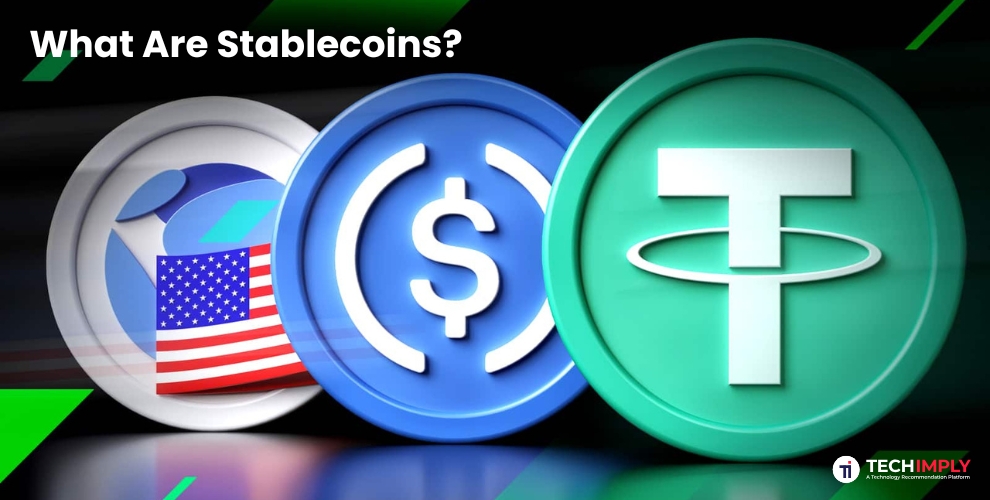
Second, Stablecoins refer to those cryptos that have been built so as to provide some amount of stability when pegged to another type of assets – fiat currencies, other cryptos or through algorithmic mechanisms – but to less extend. Stablecoins such as Tether (USDT) or USD Coin (USDC) keeps 1:1 pegging to the dollar covered by cash reserves and lacks the Fortune Bitcoin roller coaster ride. A variety of models are already in play — most notably DAI, a crypto-collateralized stablecoin using over-collateralized backing from Ethereum, as opposed to algorithmic structures like the now-dead TerraUSD (UST), which revolves around programmatic methods of quelling demand through code. As Christine Lagarde has quoted “Stablecoins are a seamless bridge between traditional finance and Decentralized Finance (DeFi) providing stability during volatile times.” The power of USDT for me has transformed the entire process of hopping on the DeFi roller coaster.
The DeFi Revolution
Spread over blockchain infrastructure, DeFi is the very purpose of providing lending, borrowing, trading, insurance, and other plugged in financial services without having to rely on middlemen brokers or banks. From Uniswap, Aave, MakerDAO we have come a long way into facilitating cost-efficient and easy access to people around the world. An “open financial system for all,” per Ethereum co-founder Vitalik Buterin, DeFi is Everything from DEXs to yield farming and beyond comes under the umbrella of DeFi, and as great and useful as all of this is, so too are the risks associated with being very much dependent on very volatile assets. This is where stablecoins come into play, enabled the functionality and credibility of the ecosystem.
Making it Easy to Save and Spend
Taming Volatility for Trading
Although DeFi relies on trading systems, volatility can destroy the best strategies. For instance, if Ethereum drops 20% mid-swap, you may have far less money to trade with before your transaction is even processed. Stablecoins remove that risk, he added. So you could exchange ETH for USDC, and then use USDC to buy another asset, and be no worse off. “Stablecoins provide the stability which traders are looking for, in particular DeFi traders,” Lagarde asserted. From my end stablecoin pairs on Curve have allowed to concentrate on strategies rather than price oscillations so users focused on this type of assets get routed to platforms that respect stable value.
Enhancing Transaction Speed
That’s exactly what DeFi codes do for timing and expense; stablecoins improve both. A bank transfer sending $1,000 dollars in travels can take up to days and $30. With USDC it is minutes and pennies. “Stablecoins remove intermediaries and smooth and reduce transaction costs,” Buterin explained. I recently sent USDT to a European DeFi platform in under five minutes for 50 cents; my bank said it would take three days and cost $25. Not just convenience but the catalyst for the engine driving the growth of DeFi for users and businesses.
Providing Liquidity to DeFi Markets
Stable Liquidity Pools With Stable Swap
DeFi liquidity pools are primarily the driving force that make it possible to trade on DEXs like Uniswap and SushiSwap using stablecoins. It makes them more reliable, and thus, stablecoins. Stablecoins accounted for 45% of DEX liquidity as of mid-2022 — a number that is projected to have grown by several orders of magnitude by March 2025 as their market cap surpassed $200 billion. This importance is emphasized by Buterin, who said: “Stablecoin liquidity is the lifeblood of a healthy DeFi ecosystem.” I've seen this on curve as their USDC pools cause volume that's basically a permanent feature to those pools and encourages people to join (figure out the liquidity platform) without a lot of fear of a sudden drop off in that volume. It is stability, which creates depth and confidence in a market.
Enabling Smooth Asset Swaps
Enter stablecoins: new price pairs might take members on a ride for whoever holds volatile or performing assets. When swapping mid-swap for USDT pairs at SushiSwap, it helps eliminate the massive volatility due to the future being much more predictable going forward as discussed here. All the experts agree as well: reduced friction equals increased trust per platform. My exchanges are certainly quicker and safer, even further up a favor of DeFi as one of the best trade hubs.
A Path to Yield Generation and Investing
Earning through Staking and Lending
Stablecoins have transformed DeFi into a passive income space. And staking USDC on MakerDAO’s Dai Savings Rate (DSR) or lending it on Aave earns you a reliably stable yield of maybe 2–5% a year, steady and fixed, free of the whims of bitcoin’s frenzies. According to Buterin, “Stablecoins enhance DeFi lending powers with trust and stability.” Someone paid $80 for that, a little money but safe last year I had deposited $2,000 worth of USDT and earned $80 for it. Such safety is what has made lending a cornerstone of DeFi attraction for risk-averse investors.
Earn Passive Income by Yield Farming
The best way to maximize yield farming, or liquidity mining, is to do it with stablecoins. For example, here I have added to a USDC-DAI pool on Uniswap, giving me a stable interest rate without suffering the wild level of volatility that torches ETH based farmers. This is something that experts have said can be done with stablecoins, since they can offer reliable yields, which might just turn DeFi into a legitimate area of investment. To me, this is another low-pressure avenue for growing my assets while still demonstrating the versatility of stablecoins.
Risk Management and Stability Assurance
Mitigating Volatility Risks
Trust and promise are some of the words; indeed, DeFi has a promise of trust in how stablecoin guarantees reasonable price fluctuations. Because they are pegged to various stable assets, they protect users against extreme volatility. You might feel comfortable, for instance, lending $1,000 in USDC on Compound-it isn’t suddenly going to half overnight for no reason. As Lagarde continues, “Stablecoins are a very important source of stability for any DeFi operation at scale.” Even other crypto-backed stablecoins such as DAI add additional security by being over-collateralized to retain value during market drops. And this cushion has enabled me to borrow and lend with the knowledge I am building a more robust ecosystem.
Supporting Sustainable Growth
Stablecoins not only act as stabilizers—they have evolved into growth engines. This liquidity pulls users to staking, farming, and trading: “Stablecoin liquidity powers DeFi ecosystem,” Buterin said. Namor was one of the first who convinced me to enter yield pools without fear of crashing, in fact, a hallmark of the larger trend is that stablecoins attract capit, and more capital attracted means more usage of the platforms. By facilitating effective swaps and transactions, stablecoins enable DeFi to expand sustainably, promoting involvement from all players.
Fostering Innovation and Adoption
Training up to October 2023
This penetrates the DeFi protocols, increasing the utility of the tokens. In this way, either borrow USDC on Aave and going long on it in a stablecoin pair on Uniswap or shorting it against other stables—simplified a vast range of economic transactions. As Buterin writes, “Integrating with stablecoins eliminates volatility risk and increases efficiency. This synergy made my DeFi endeavours smooth and thus increased trust and adoption throughout the industry.
Future Trends and Innovations
The future looks bright for stablecoins in decentralized finance (DeFi). The experts are waiting for more definite regulations — like US audits for stablecoins or Europe’s MiCA framework — to provide the legitimacy that these assets require by 2026. Smart contract logic would enable programmable stablecoins that can flip products such as automated loans on their head. As Lagarde put it: “Stablecoins will seamlessly connect global finance.”
In my opinion, these trends indicate a DeFi future defined by stability existing alongside innovation in order to drive mass adoption forward.
A Personal Reflection: Stablecoins as My Anchor in DeFi
I was scared of DeFi at first; a one day drop of nearly 15% for ETH and every bit of that had been learned the hard way. Then came stablecoins. APW- Swapped my USDC after 2023 crash kept $3000 in tact and re entered at bottom with $500 profit With lending USDT to Compound I gained pure interest, farming USDC on Curve made my wallets fat but without even a single sleepless night. Not only do stablecoins have a role in my portfolio, but they’ve also enabled DeFi for me entirely, providing both safety and opportunity.
Conclusion
Stablecoins are crucial in DeFi, lending a bit more stability to what could be a chaotic tapestry. They assist in the execution of transactions, increase liquidity, provide yield opportunities, and act as risk hedges. This creates an ecosystem that is safe and lively; My thinking on them is that they are essential, because they make DeFi a place where anyone can go — make money, without worrying, the choice of the crossroad between global fintech and the busker mentality of our blockchain world. March 2025+, witness how stablecoins continue thrusting DeFi into the next phase of innovation into a resilient and inclusive financial-integrated future with vertical and horizontal innovations.