Distributed teams provide advantages around flexibility, global talent, and productivity around the clock. However, they also have their own collaborative challenges. Time zones can create gaps in productivity, where communication silos lead to misinterpretation of work, and being physically apart can make accountability opaque. To overcome those obstacles, organizations need to have digital systems that accomplish two things: connect work and provide clarity, impartiality, and transparency across the globe. That is why the top project management tools are no longer task list applications; they are platforms that minimize barriers while keeping distributed teams in sync.
Lark Messenger: bridging communication gaps
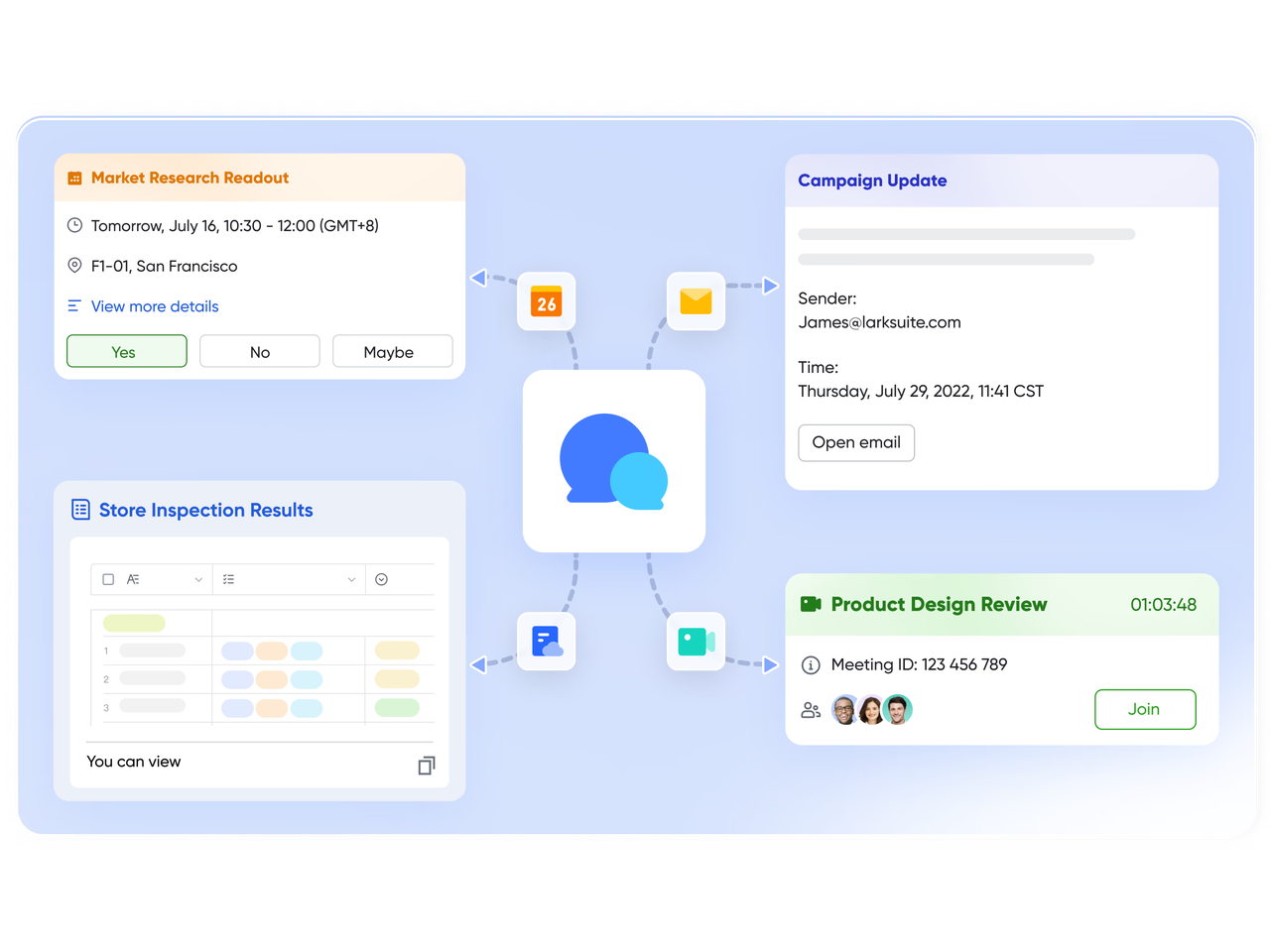
For distributed teams, communication is typically the first obstacle, when distance makes every update complicated. Lark Messenger helps to eliminate this issue by making conversations accessible, contextual, and actionable in ways that email or fragmented tools cannot. Threaded conversations keep discussions together, so distributed teams can easily read conversation updates rather than scrolling through long chat histories. Pinned messages allow important updates to be preserved, ensuring employees who log in hours later will see the same artificial context as their coworkers did when it was first created.
Messenger also treats urgency with elegance. Buzz notifications are great for cutting through the noise so urgent issues can be communicated immediately, no matter the time zone. But ultimately, Messenger connects to execution directly. Simple conversations can be turned into tasks, approvals, or calendar events with a single action, preventing the possibility of misalignment between what is discussed and what is executed. This is critical for fast-moving distributed teams . It guarantees that discussions have a direct line of actionable output, whenever and wherever teams are located.
Lark Base: keeping distributed teams aligned on execution
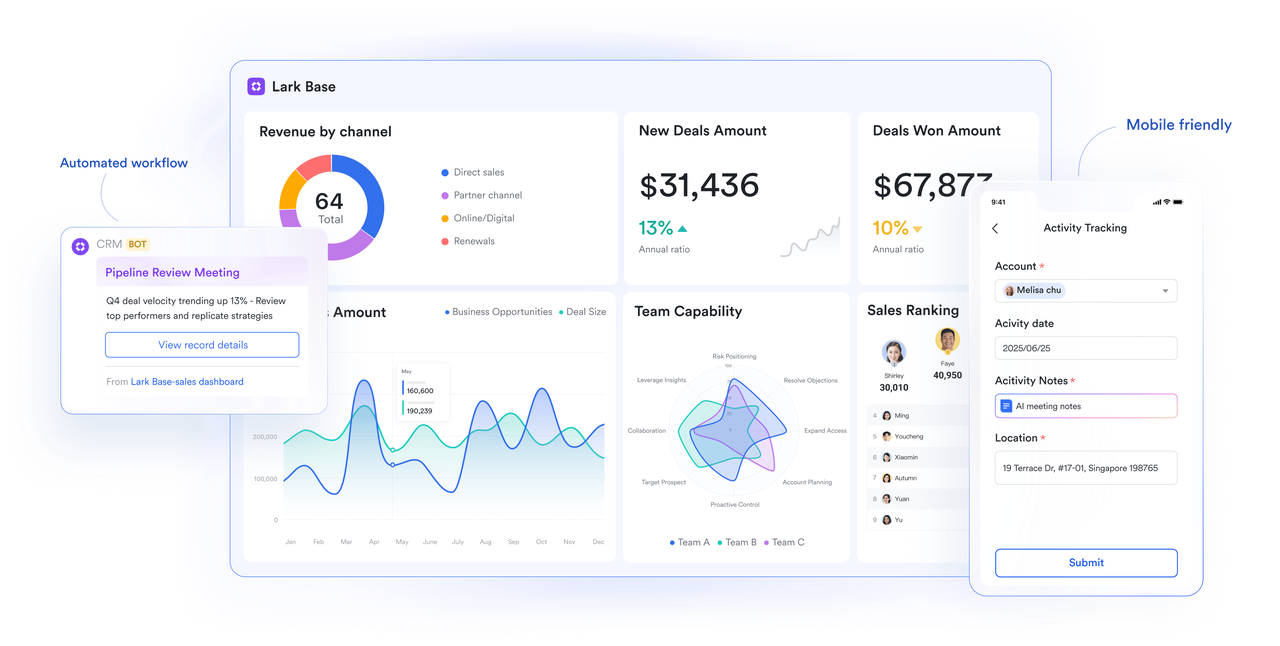
Maintaining project alignment across different locations is one of the hardest challenges for distributed teams. Lark Base addresses this by providing a cloud-based system where execution is transparent and structured. Teams across continents can view the same database in dashboards, kanban boards, or grid views, which means updates are instantly visible and consistent. This eliminates the risk of conflicting information being passed through local spreadsheets or offline documents.
Accountability works best when it’s built into the system itself. In Lark Base, ownership fields clearly assign responsibility for each milestone, eliminating duplication and confusion. Real-time automations keep records current, reducing manual check-ins while keeping progress visible to all. Dependencies map out how one delay can ripple across teams or regions, giving everyone a clearer sense of impact. By linking customer-facing data with internal project tracking, Base ties CRM app processes directly to execution—ensuring distributed teams stay focused on outcomes that drive business performance.
Lark Docs: creating shared clarity across borders
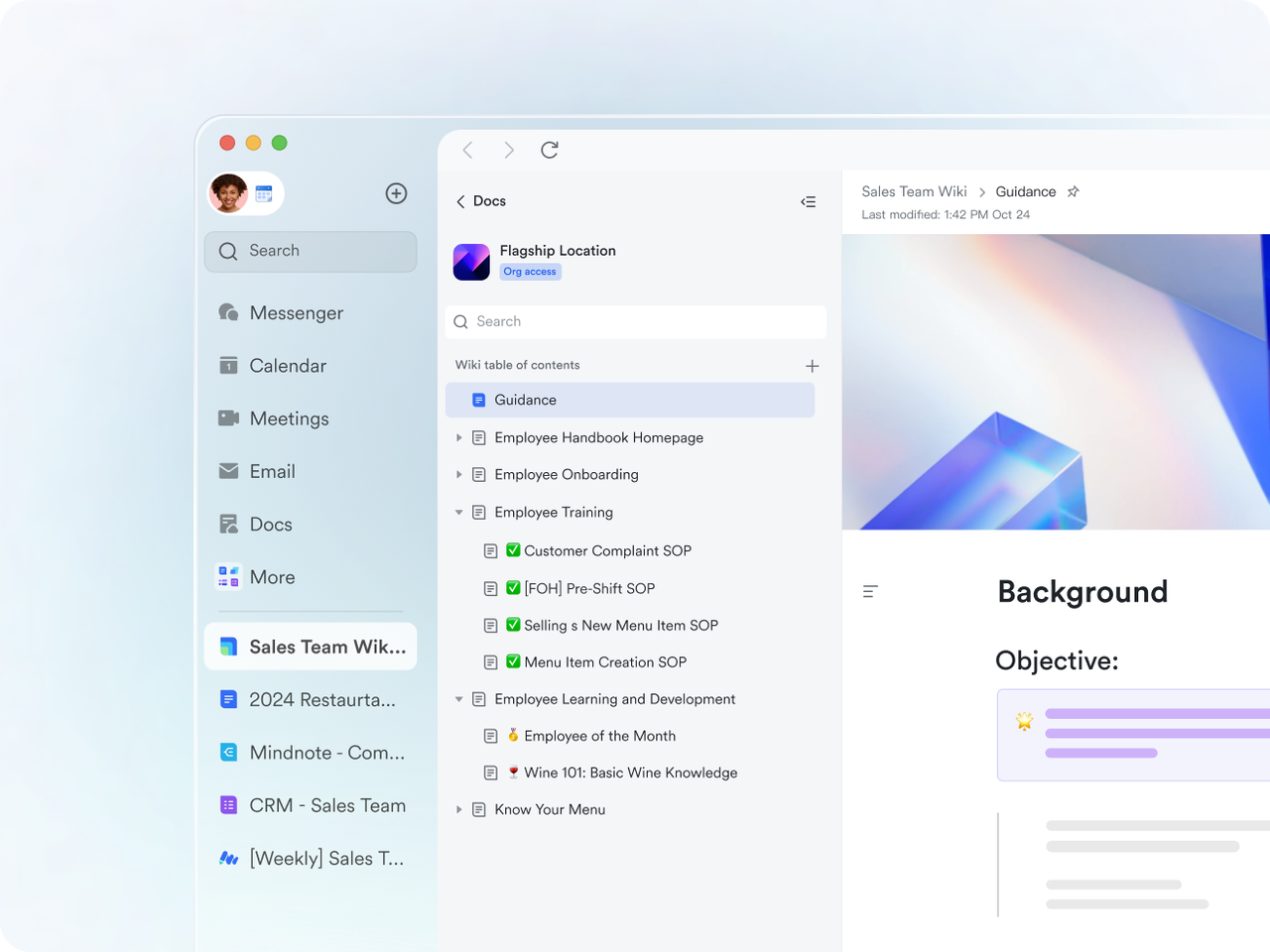
In distributed teams, clarity is often difficult when knowledge is spread all around. For example, we are going to look at how Lark Docs allows documents to become living documents, changing and adapting to motion that employees across several time zones have access to and can update in real-time. Co-editing means that multiple contributors can collectively build a proposal or strategy at the same time without worrying about version control, which prevents simple delays that come from emailing files back and forth or using outdated versions.
The inline commenting feature helps keep questions or feedback attached closely to the specific content being referenced, leading to a more efficient discussion between team members asynchronously. The version history feature provides a complete history of how ideas or reasoning were applied to changes made, meaning anyone can see how the content evolved even if they were not part of the original discussion. Lark Docs can also embed live data from a Lark sheet or link to actions and approvals, which provides an opportunity for documents to become not just papers but actionable happenings! For distributed teams, being able to operate and make decisions based on a single, current source document mitigates confusion from miscommunication or lack of details across borders.
Lark Approval: streamlining decisions across time zones
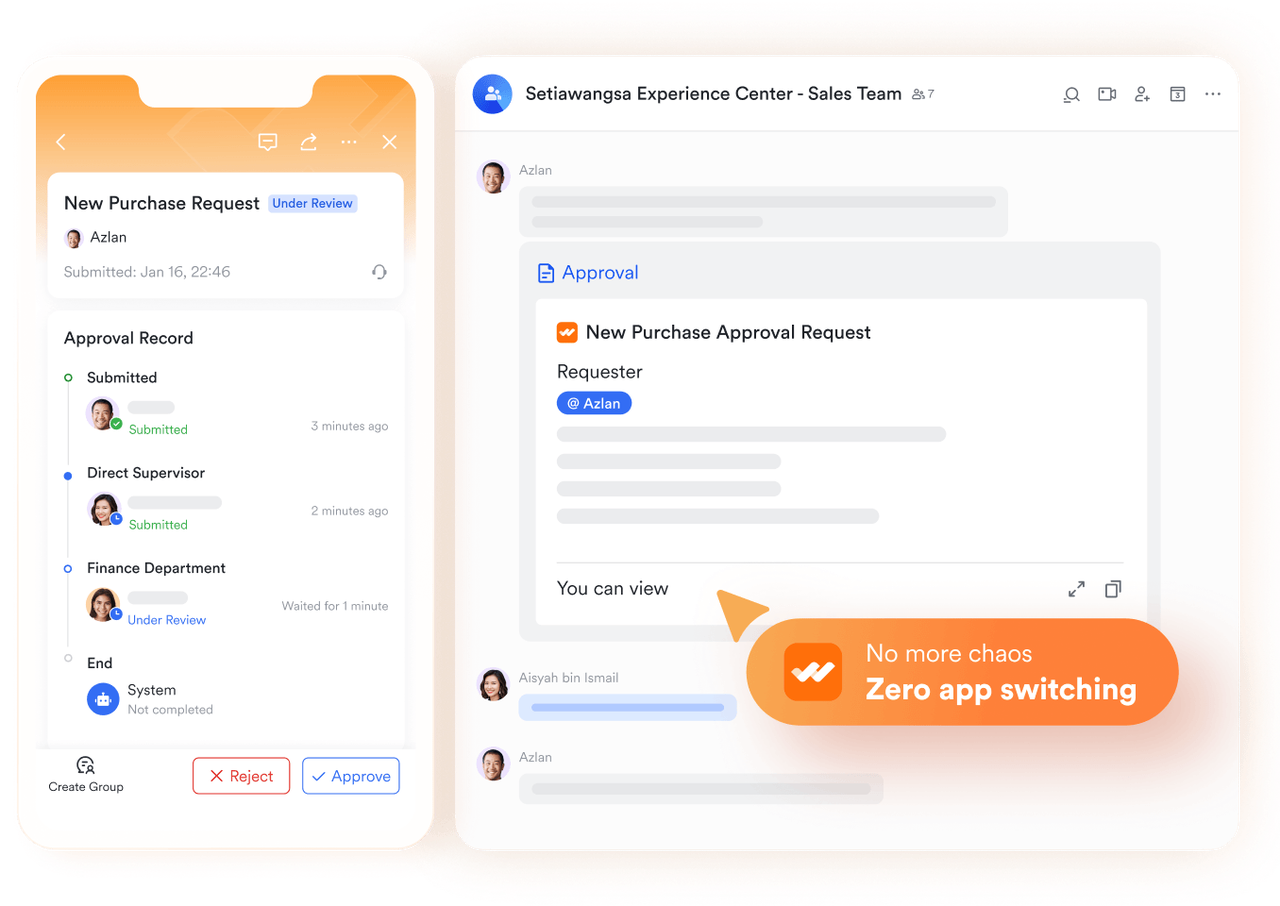
In distributed teams, approvals are notorious for causing delays—requests may sit idle for hours while reviewers sleep in another time zone. Lark Approval streamlines this process by ensuring requests are structured, transparent, and cloud-based. Customizable forms ensure requests are complete from the start, reducing back-and-forth clarifications that waste time. Routing rules automatically send requests to the correct reviewers, so employees don't have to guess where to send them.
Notifications appear directly in Messenger, where employees are already collaborating, making it easier to respond quickly. Each approval is logged, creating a clear history that builds trust and transparency between teams. Leaders can also see where bottlenecks occur, helping them optimize workflows. By operating through an automated workflow, Approval removes the uncertainty of waiting for responses. For distributed teams, this ensures decisions are made quickly and predictably, allowing projects to move forward without unnecessary downtime.
Lark Minutes: preserving alignment from meetings
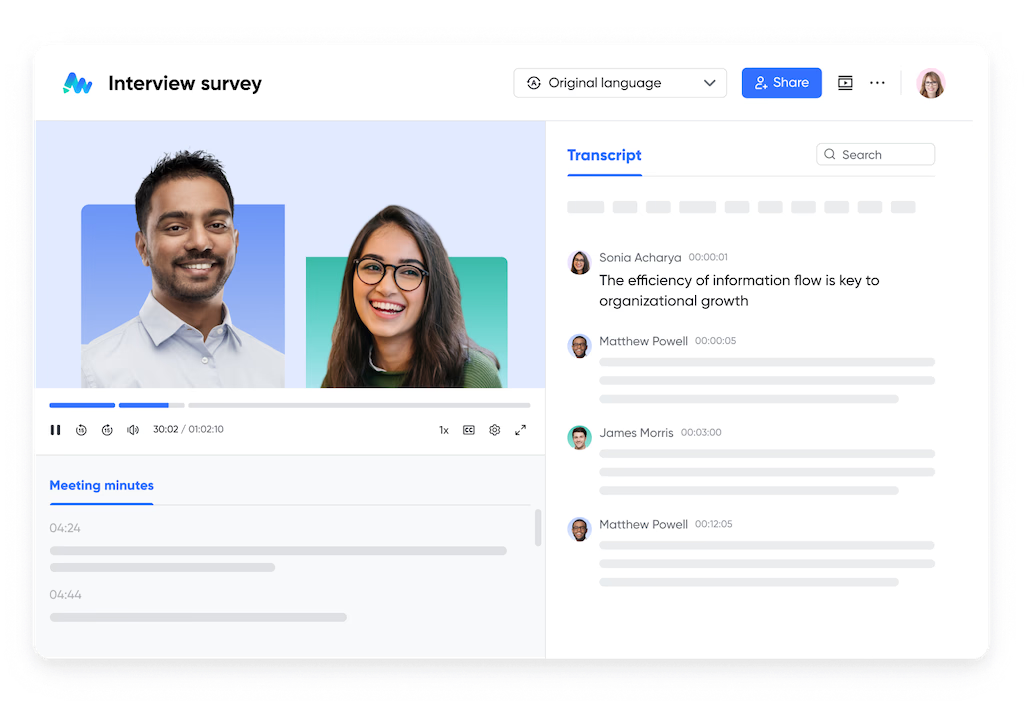
Meetings are the lifeblood of distributed teams, but time zone differences often necessitate that not everyone can come together live. Lark Minutes ensures that meetings are valuable, and their value can extend beyond those present in the meeting, by capturing meetings in many different ways. Automatic transcribing captures the entire conversation, leaving no detail behind. It condenses conversations into highlighted areas, so employees can reference the decisions made without having to rewatch the full recording.
Action items are pulled directly into Tasks, which creates accountability in different regions. Clip sharing allows teams to send out the relevant portions of a meeting to different teams, so employees expend no time on rewatching parts of meetings that don't pertain to them. By doing this, it makes a meeting ephemeral conversation a permanent possible action. For distributed teams, Minutes ensures that alignment does not end with those present in the virtual room; it extends to anyone regardless of their time zone.
Lark OKR: aligning distributed teams with shared goals
A common challenge in distributed teams is ensuring that employees feel connected to the broader mission. Lark OKR addresses this by tying individual contributions to larger organizational goals. Objectives are set transparently, so employees see how their daily work supports company strategy. Alignment views connect team-level goals with organizational outcomes, building a sense of shared purpose even when employees are working from different continents.
Dashboards make progress visible in real time, which helps leaders evaluate whether teams are on track and allows employees to celebrate milestones. Regular reminders keep OKRs front of mind, preventing them from fading into background noise. This ensures distributed teams stay focused on outcomes rather than just activity. By making purpose clear, OKR helps bridge the cultural and geographic distances inherent in distributed teamwork.
Conclusion
Working together in distributed teams can be difficult, but the right tools make it a manageable problem and even a competitive advantage. Lark has systems to overcome distance with clarity and connection, from Messenger which enables structured and actionable communication, Base manages the work and aligns accountability, Docs provides clarity through living documents, Approval allows you to eliminate slow decision making, Minutes to provide internal alignment when leaving a meeting, and OKRs to connect everyone to the same goals.
With these tools, distributed teams turn collaboration problems into opportunities for growth, giving them the ability to work seamlessly across time zones, leverage global talent efficiently, and create a culture of accountability and trust beyond proximity.