Running a successful medical practice in 2025 means juggling more than just clinical care. From appointment scheduling and insurance verification to billing, reporting, and compliance, administrative complexity has grown rapidly. What used to be managed with spreadsheets or basic tools now requires a smarter, integrated solution.
That’s where medical practice management software comes in. These platforms don’t just help with logistics—they’re critical to how efficiently a practice operates, how quickly it gets paid, and how smoothly patients move through the care experience.
But with dozens of vendors promising similar features, choosing the right system can be overwhelming. Go too basic, and you’ll outgrow the platform in a year. Go too complex, and your staff may struggle to use it. The goal is to find a solution that fits your size, specialty, workflows, and growth plans—without requiring a complete operational overhaul.
In this blog, we’ll walk through what medical practices should look for in a management system today, what to avoid, and how to choose a trusted solution that supports smart, scalable growth in 2025.
What is Medical Practice Management System?
Medical practice management system (PMS) is the digital backbone of a healthcare organization’s administrative operations. While Electronic Health Records (EHRs) focus on documenting clinical encounters, PMS is built to streamline the business side of healthcare—making sure everything runs smoothly before and after the visit.
At its core, PMS helps staff manage:
- Appointment scheduling
- Patient registration and intake
- Insurance eligibility verification
- Claims submission and tracking
- Billing, invoicing, and payment posting
- Reporting and analytics for financial and operational performance
A well-designed PMS allows front-desk staff to check patient eligibility in seconds, helps billing teams resolve claim denials quickly, and enables administrators to monitor trends like no-show rates or reimbursement times. For providers, it means fewer distractions and better support from their care team.
What sets advanced practice management platforms apart in 2025 is how deeply they integrate with other healthcare systems—especially EHRs, labs, and clearinghouses. When everything works together, the administrative side of the practice becomes invisible. Patients move through more efficiently, staff spend less time chasing down details, and revenue cycles tighten up.
Whether you’re a solo provider, part of a specialty group, or managing multiple locations, PMS is no longer just helpful—it’s mission-critical. Choosing the right system can mean the difference between a practice that runs... and one that thrives.
Efficient medical practice management isn’t just about using the right software; it’s also about ensuring seamless billing and claims handling. Partnering with a reliable medical billing company like AnnexMed can help healthcare providers reduce administrative tasks, improve cash flow, and maintain better control over the revenue cycle. Combining smart software with expert RCM support ensures smooth operations and enhanced patient satisfaction.
Why the Right PMS Matters More Than Ever
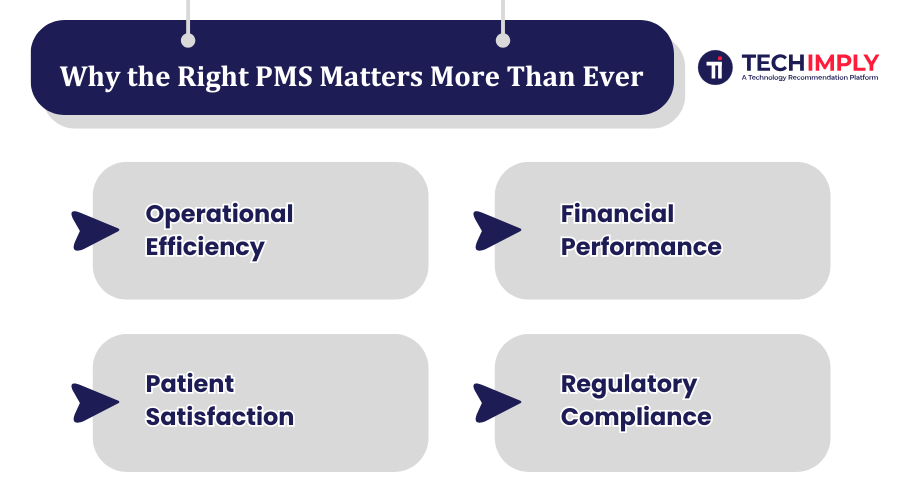
In 2025, running a practice means navigating more complexity than ever before. Between shifting regulations, rising patient expectations, and pressure to do more with less, your administrative systems need to be as efficient as your clinical ones.
That’s why choosing the right medical practice management system is no longer a behind-the-scenes decision—it directly affects patient care, staff satisfaction, and your bottom line.
Here’s what a modern PMS helps you achieve:
-
Operational Efficiency
Manual tasks like appointment reminders, eligibility checks, and claim scrubbing take time and are prone to error. A strong PMS automates these workflows, freeing your team to focus on higher-value activities—like patient interaction and revenue follow-up.
-
Financial Performance
With thinner margins and growing payer complexity, practices can’t afford claim delays or billing mistakes. PMS platforms with real-time eligibility verification and denial management tools ensure clean claims go out faster—and payments come in sooner.
For example, practices using integrated billing systems report significantly shorter A/R cycles and fewer write-offs due to unverified coverage or coding errors.
-
Patient Satisfaction
Patients expect digital convenience. A PMS that enables online scheduling, real-time appointment reminders, and simple payment options helps you deliver the seamless experience they now expect—and keeps them coming back.
-
Regulatory Compliance
From ICD-11 and HIPAA to value-based care tracking, compliance demands are rising. The right PMS supports real-time updates, audit logs, and regulatory reporting, helping you avoid penalties and stay ahead of changing rules.

Pro-tip
If your current system requires workarounds to meet new regulations, it's time to explore better options.
A future-ready PMS is more than just a scheduling tool—it’s a foundation for stability, growth, and high-quality care. Practices that modernize their operations with the right platform today will be the ones leading their markets tomorrow.
Features to Look for in the Best Practice Management Software
Not all practice management systems are built the same. In 2025, the best platforms are those that reduce administrative burdens, improve financial performance, and deliver a better experience for both staff and patients. Whether you're evaluating a new system or upgrading from a legacy platform, these are the features that should top your checklist.
1. Integrated Billing and Claims Management
A modern PMS should offer full revenue cycle management, not just basic invoicing. Look for platforms with real-time claim status tracking, built-in claim scrubbing, and denial management tools that help increase your clean claim rate and shorten the reimbursement cycle.
2. Smart Appointment Scheduling
Look for tools that go beyond the basics. Drag-and-drop scheduling, multi-provider calendars, and automated reminders help reduce no-shows and keep your daily flow smooth. The ability to set rules by appointment type, provider availability, and location makes scheduling far more efficient.
3. Instant Eligibility Verification
PMS platforms that perform real-time insurance eligibility checks help prevent rejected claims and billing delays. Staff can verify coverage before the visit, helping set accurate expectations with patients and minimizing financial surprises. For practices looking to improve this process, Best insurance verification can help automate eligibility checks and streamline verification workflows.
4. Customizable Reporting and Dashboards
Real-time analytics help you track performance across key metrics—like patient flow, reimbursement speed, claim denials, and staff productivity. Look for systems that let you customize dashboards so each team member sees the insights that matter most to their role.
5. Patient Engagement Tools
Today’s patients want more than reminders—they want access. The best PMS platforms include patient portals, secure messaging, online bill pay, and appointment self-scheduling. These tools don’t just improve satisfaction—they reduce phone volume and administrative workload.
6. Cloud-Based Access and Mobile Compatibility
Cloud-based PMS platforms provide secure, anytime-anywhere access. They eliminate the cost and hassle of managing on-site servers and enable mobile documentation for providers working across multiple sites or via telehealth.
7. EHR and Lab Integration
Your PMS should seamlessly integrate with your EHR, labs, imaging centers, and clearinghouses. Interoperability reduces double entry, ensures accurate records, and supports coordinated care across the patient journey.
Choosing software with these features ensures that your operations are not only efficient today, but ready to grow and adapt to tomorrow’s challenges.
Common Mistakes Practices Make When Choosing PMS
Selecting the right medical practice management system can feel like a high-stakes decision—and it is. The wrong choice can lead to frustrated staff, lost revenue, and workflows that never quite click. To avoid costly missteps, it’s important to recognize the most common mistakes practices make during the selection process.
1. Prioritizing Price Over Value
While budget is always a factor, choosing software based solely on price can backfire. Low-cost platforms may lack essential features, offer limited support, or struggle to scale with your practice.
2. Overlooking Staff Training and Support
Even the most feature-rich platform is useless if your team doesn’t know how to use it. Choosing a system without adequate onboarding, live support, or learning resources leads to frustration and inconsistent usage.
Ask vendors about:
- Implementation timelines
- Role-based training
- Live support availability
- Ongoing education and updates
If the answer is “self-serve only,” that’s a red flag.
3. Skipping the Demo or Trial Phase
It’s one thing to read about features—it’s another to see them in action. Failing to schedule a hands-on demo means you’re relying on marketing claims rather than real-world usability.
Ask for a live walkthrough using scenarios specific to your practice, such as scheduling a new patient, submitting a claim, or generating a report. This helps you assess fit, speed, and ease of use.
4. Choosing Software That Doesn’t Scale
Your practice may grow—whether through added locations, new providers, or expanded services. Choosing a rigid system that doesn’t scale easily can force another costly migration down the road.
Being deliberate during the selection process pays off. Avoiding these mistakes not only prevents short-term headaches—it sets your practice up for long-term success with a system that actually supports your goals.
Modern Medical Practice Management Systems: Built for Today’s Healthcare
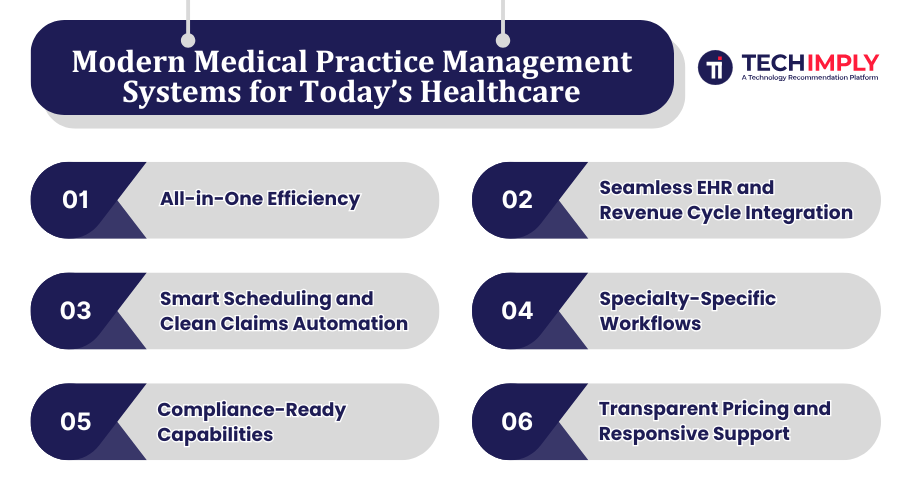
With hundreds of vendors on the market, choosing the right practice management system (PMS) can feel like navigating a sea of sameness. But the most effective systems distinguish themselves through an all-in-one platform that blends robust functionality with intuitive design—specifically crafted for the fast-paced realities of modern healthcare.
Here’s what makes a top-tier PMS a trusted choice for practices of all sizes—from solo providers to large, multi-site networks:
-
All-in-One Efficiency
An effective medical practice management system brings together essential administrative tasks—such as appointment scheduling, claims processing, billing, and reporting—into one unified platform. This kind of integration eliminates the need to juggle multiple tools, reducing the risk of data silos, duplication, and workflow inefficiencies.
-
Seamless EHR and Revenue Cycle Integration
What truly sets high-performing systems apart is their ability to seamlessly integrate with electronic health records (EHR) and revenue cycle management (RCM) solutions. Real-time data exchange between clinical and financial modules ensures more accurate documentation and billing—without the need to switch screens or re-enter data.
-
Smart Scheduling and Clean Claims Automation
Advanced scheduling engines adapt to provider availability, appointment types, and resource requirements to reduce no-shows and optimize calendar utilization. On the billing side, features like automated claim scrubbing and real-time eligibility checks contribute to clean claim rates exceeding 98%, accelerating reimbursements and minimizing rework.
-
Specialty-Specific Workflows
From pediatrics and dermatology to cardiology and oncology, leading PMS platforms provide tailored templates, specialty-specific coding tools, and optimized workflows for over 30 medical specialties. This minimizes setup time and supports clinicians in practicing medicine their way, with minimal disruption.
-
Compliance-Ready Capabilities
Whether it’s HIPAA, ICD-11, or MIPS, staying compliant is non-negotiable. Leading systems not only update automatically to reflect changing federal regulations but also offer MIPS Consulting Services to help practices navigate performance reporting requirements with confidence—ensuring that documentation, billing, and reporting are always audit-ready.
-
Transparent Pricing and Responsive Support
No hidden fees. No drawn-out support queues. A reliable PMS should offer upfront pricing, clear communication, and dedicated support from experts who understand healthcare operations. Implementation should be hands-on, training personalized, and help readily available when needed—not just during standard business hours.
Whether starting a new clinic or upgrading from an outdated system, today’s top practice management solutions deliver the flexibility, dependability, and innovation healthcare practices need to stay competitive in 2025 and beyond.
Final Thoughts
Choosing the best medical practice management software is more than a technology decision—it’s a business strategy. The right platform improves how your team works, how patients engage with your practice, and how efficiently your revenue cycle runs. In a healthcare environment shaped by rising expectations and tighter margins, that kind of support isn’t optional—it’s essential.
As you evaluate PMS vendors, don’t just focus on features—look at the long-term fit. Ask how the system will grow with your practice, support regulatory changes, and reduce the daily friction that slows your team down.
If you’re evaluating medical practice management system in 2025, be sure to choose a solution that aligns with your specialty, scales with your growth, and delivers the support your team needs to thrive.


.png "How To Find and Hire Ecommerce Experts For Your Online Stores?")