


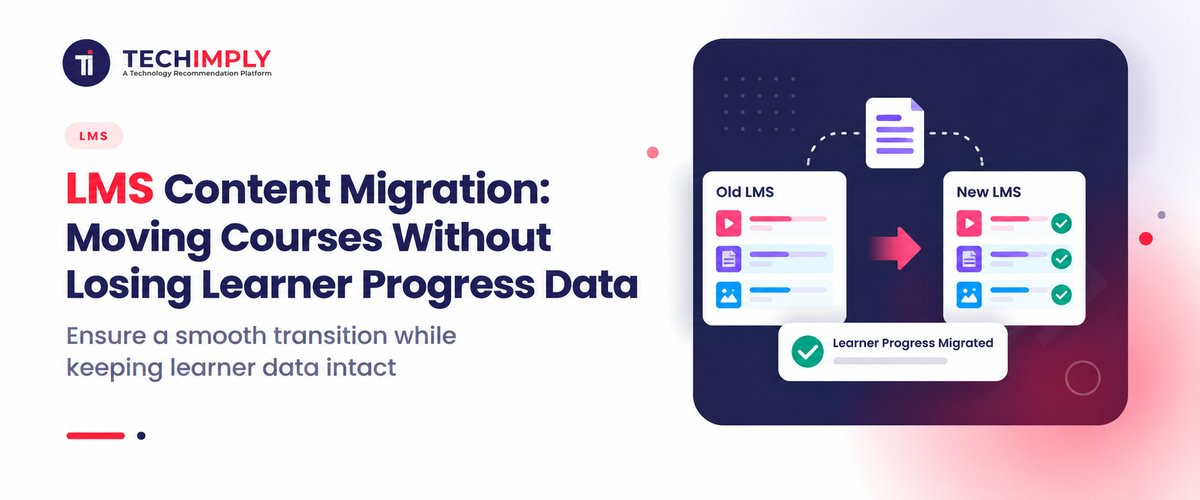
In the fast-evolving world of business and education in India, businesses need to transfer their learning assets, learner databases, and system setups from their LMS to a new one without hindering the ongoing training. Companies are motivated to migrate to keep up with the current digital transformation happening within the country, upgrade old systems, provide cloud-based services to their remote employees, and consolidate after business mergers. Besides the technicality of moving the digital files and a few SCORM packages, the main focus of such a complex task is to make sure that all the former learner records are kept intact. Tracking learner performance is crucial for the risk management of companies because following important regulations requires having accurate documentation of compliance and success of the company without making the employees retake the already completed training modules.
What is LMS Content Migration?
LMS migration refers to the transfer of digital learning components from one learning management software to another. Companies typically undertake migration when they are upgrading their educational technology, changing software vendors, or merging services after the acquisition of businesses. The chief goal of this process is to create a fully operational learning environment in the new platform without disrupting training processes or losing any access to previous course content.
In addition to the transfer of static documents, including, for instance, videos, PDFs, and slide presentations, a successful migration involves the transfer of dynamic user data. The movement of learner progress details is very important, including completion data, scores of quizzes, logs of attempts, certificates, and compliance data. It is critically important to ensure that this information is transferred accurately and properly for organizations operating under strict regulations, because the loss or distortion of advance records brings about legal consequences or numerous retakes of lengthy courses by employees.
Did you know?
Do you realize that one of the biggest technical challenges in an LMS migration is not the actual moving of course content but instead the transfer of the suspend data, found within the SCORM packages that are typically made use of during courses? When a learner has paused the lesson and has completed only some part of the course, the system keeps a long string of data that shows exactly where the learner has reached during this interaction, which bookmarks have been created, and which answers have been given so far. Given that every LMS reads and saves this piece of information differently, it will not be possible to transfer all active learners to the new platform while keeping the progress that they have already made without custom ETL pipelines and extensive piloting.
Why does LMS Content Migration matter for your Organization?
The success of LMS content migration greatly affects your organization, as it will influence the operational capacity and financial analysis tools outcomes of the company. When a learning management system is being upgraded or changed, the successful migration of course content contributes to the efficiency of the overall endeavor and makes it possible to avoid serious interruptions in the company’s processes.
The need to retain historical learner progress details and compliance records in a migration process is crucial for risk management and regulatory requirements. Different sectors of business sometimes require having strict, verifiable proof of safety training, legal documentation, or other particular certifications. This involves keeping track of every attendee's completion, grading, and date of completion. Therefore, losing or damaging such historical data can lead to some problems with regulations and audits, and as a result, the staff will have to retake the course they' have already passed.
Successful migration of the content makes sure that you get maximum profit from your software technology. Shifting toward a new learning management system gives you a chance to get rid of expensive old technologies and make use of the capabilities of modern, adaptable reporting tools that you can find in new services. While keeping and managing the way of organizing the course structure, interactive SCORM content files, and user databases, you will accomplish the main tasks of keeping your digital knowledge base and making the most of your investments made in the training and development process.
What Learner Progress Data do you need to Protect during a Migration?
Continuing to preserve learner progress information aids in development continuity, adherence to regulations, and an easy-to-use experience for users in the LMS migration process.
- Students' Completion Statuses: Definitive information about course/module/class status that can be Not Started, In Progress, or Completed.
- Results: Results of tests, including raw score and pass status, as well as all answers to questions.
- Timestamps and Audit Logs: Information about the dates and times of acquiring enrollment and finishing classes or modules, including the duration of each module.
- SCORM/xAPI Suspend Data: Different samples of telemetry data that comprise micro-level screens, video pauses, and bookmarks enabling students to continue from the point left.
- Certifications & Expiration Dates: This includes everything like certificate identifiers, credential IDs, issue date of certification & the date of recertification for tracking compliance.
- Credits & Continuing Education (CEU) Hours: All the credits related to professional development earned or contact hours, or training points have been maintained.
- User Assignment & Enrollment Records: Employee of record of all active status of a course enrollments, learning paths assigned, and cohort memberships held in the past.
- Instructor Feedback & Submissions: All types of assignments submitted have been noted; files submitted; contributions made on the discussion platform & instructor score have been recorded.
How do you move Courses without losing Learner Progress Data?
Courses need to be migrated in a proper manner along with the progress of the learners.
- Data Schema Audit Mapping: Every source data field used, like completion indicators, marks in the quiz, timings of the quiz, and SCORM suspend data, needs to be mapped perfectly with the required LMS database structure.
- Freeze Course Changes: The source LMS must be frozen from changing the structure of the courses used, quizzes, or tracking measures in order to not create confusion during the process of migration.
- Get the Actual Progress Data: Database Queries can be used to get the entire history of the users.
- Change Data into Approved Formats: Change the information obtained into well-known formats (CSV, JSON, or xAPI statements) that will meet the requirements of the new organization data.
- Conduct Registration Process Tests: Migrate a limited test group into a sandbox environment to confirm that bookmarks, results (pass/fail), and completion date show correctly.
- Make Final Data Syncing: Make a final data extraction just before the final switch to capture the data about progress, attempts, and completions of the active students during the transition period.
- Checking the Logs after the Conversion: Check the accounting in the current environment against the historical records to make sure no data is lost or corrupted.
What are the Biggest Risks and Common Mistakes to Avoid?
Migrating LMS content within the Indian business context entails different challenges in terms of regulations, technology, and management practices. However, information migration is more than just a technical matter, since it also involves complying with privacy regulations.
Key Risks in Indian Market
- Risks of DPDP Non-Compliance: According to the Digital Personal Data Protection (DPDP) Act, serious penalties can be applied in case of data breaches and mishandling of data principals, while unencrypted export of confidential information can lead to serious legal consequences.
- Cloud Data Storage Issues: Data stored or transmitted to LMS platforms located abroad without proper compliance can risk breaking regulations on data residency.
- Loss of SCORM Suspend Data in Areas with Poor Internet Connections: Employees in Tier-2/Tier-3 regions with unreliable internet need precise SCORM bookmarking. Any corruption in suspended data means that employees in remote locations have to restart long compliance training modules, resulting in increased help desk tickets and low completion rates.
- Loss of Audit Trail for Mandatory Training: Indian companies are subjected to rigorous internal or statutory audits regarding their POSH (Prevention of Sexual Harassment), labor safety, and compliance training. Loss of completion and timestamp records will cancel corporate compliance certification.
How do you test and verify a Successful Migration?
- Conduct Staging Sandbox Audits: Transfer a representative 5% sample cohort (that includes exceptional cases such as students taking courses actively in the middle of the semester, unsuccessful students and the ones whose certifications expired) in a staging environment in order to find schema inconsistencies before the start of the actual cutover.
- Conduct Database Row & Sum Validation Scripts: Use automation tools to run SQL queries comparing source and target databases in order to check whether the number of records (such as completed courses, enrolled students or created user profiles) matches.
- Validate SCORM Suspend Telemetry: Sign in as active members to make sure modules are resumed from the bookmarked page and previous answers are saved properly.
- Check Compliance Audit Logs: Randomly examine important compliance training (such as POSH, OSHA or financial regulations) in order to ensure that the timestamp, the score and the identification number of a certificate are unchanged.
- Conduct an End-to-End UAT: Involve important stakeholders (students, teaching staff and system administrators) in testing the various scenarios, such as taking part in a questionnaire, getting their certificates and preparing reports on the educational progress of the members of the team.
- Check the SSO & HRIS Integration: Identify the effectiveness of the way the Single Sign-On system works with the HRIS.

Pro-tip
Block any LMS course revisions and set a deadline on any ongoing SCORM course development 48 hours before the migration takes place. Tip #2: Keep a backup copy of your legacy system for at least 180 days in order to provide required documents for audits without having to contact your old software provider. Tip #3: Measure peak login numbers on the 3G/4G networks of various regions to prevent the LMS database from being blocked when people throughout India attempt to log in on the day of the system launch.
Conclusion
The success of a smooth LMS transition depends on thorough data mapping, proper compliance processes, and good pilot testing to ensure there is no loss of learner progress data. Preserving historical records helps to stay in the compliant phase while avoiding interruptions to personnel development. Choosing a dependable learning solution allows for the avoidance of organizational issues and reducing technological friction. To get an appropriate solution that suits the peculiarities of your company’s infrastructure, use Techimply the recognized platform for finding, comparing, and purchasing any business software for better digital transformation.


.png "5 major Payroll Statutory Compliance changes in 2022")
.jpg "The Best Image to Text Converters that Helps the Students in Assignment Writing")


