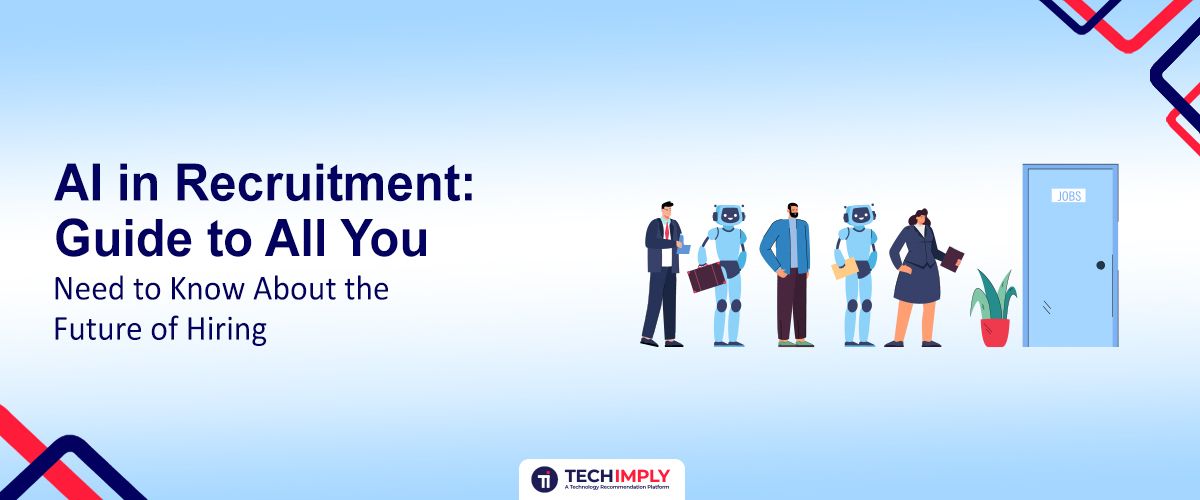
Modern hiring process is very different from how it used to be in the past. A lot has changed from candidates’ expectations to a faster job market, so recruiters need to be practical about using smarter tools to keep up. This is where AI recruitment comes in.

Looking for Artificial Intelligence?
Check out Techimply's AI Software for your business.
Artificial intelligence hiring is changing how organizations find and identify talent by using data, automation, and machine learning. From reviewing CVs to sending personalized follow ups or even selecting the top candidate from the pool of CVs, AI in the recruitment process brings a new level of precision and efficiency to the hiring process. But AI recruitment also raises questions around ethics, transparency, and the human element of hiring. In this blog, we will look at what recruiting AI really means, its benefits, its limitations, and what the future of hiring might look like in 2025 and beyond.
What Exactly is AI in Recruitment?
AI in recruitment employs the use of artificial intelligence technologies in streamlining, enhancing, or supplementing numerous features of the hiring process. It does not imply replacing recruiters but helps them conduct their work with greater efficiency and make informed decisions on hiring.
At its base, AI recruitment involves the use of machine learning algorithms, natural language processing, and predictive analysis to facilitate recruitment. For example, AI is able to go through numerous resumes within a very short while and pick out the best candidates whose skills match those required for the position. It can do video-based sentiment analysis on interviews, predict employee performance, and automate follow-up messaging.
Common applications include:
- AI sourcing tools that search job boards and databases for passive candidates
- Chatbots that manage FAQs, screening questions, and scheduling
- Resume ranking systems that rank applicants based on pre-defined parameters
- Interview analytics systems that examine tone, language, and behavior
With AI hiring technologies, recruiters will have more time to interact with suitable candidates and less time performing mundane admin tasks. It finds the best talent that might have been overlooked, it eliminates bias, and it reduces the time-to-fill with no increased costs.
However, it is important to note that AI in hiring is not a universal solution. Choosing the right tools is wise, and making sure it connects properly with the rest of the HR system, and monitoring every now and then for transparency and precision is critical. When correctly implemented, AI not only enables the hiring process but it is also revolutionizes it.
Why is AI Important for Recruiting?
Hiring these days involves so much more than simply posting openings and scanning through resumes. With numerous hundreds or thousands applying, hiring staff must find a smarter way of working, not harder. That is where AI recruitment comes in.
AI recruiter tools reduce the time spent on repetitive tasks like resume screening, candidate ranking, interview scheduling, and other actions so that recruiters can now devote their time to creating relationships and rapport with the candidates they are interviewing and selecting. Not only this, but they can review historical data on hiring to see what has and has not worked, allowing teams to adjust their methods over time. Using AI recruitment software can also help teams hire more equitably, guard against unconscious bias, and enable teams to make informed and accurate decisions.

Do You Know?
Voice analysis is just one of the methods that some AI recruiting apps have employed to measure personality traits like confidence, stress, and communication style during phone and video interviews. It is, however, important to note that these AI tools do not make decisions– they simply provide some additional information to the recruiters for their convenience.
AI also serves an additional significant role in the creation of workforce trends. The AI impact on employment is more than just machines doing the human work, it is also changing how organizations will strategize, deploy, and prepare for the workplace in the future. In an article by Demand Sage, the business side of AI hiring was projected to grow at a rate of 6.78% per year from 2023 to 2030. The growth in the number of organisations utilising intelligent systems is a positive for the HR department since it will assist them in becoming more proficient at forecasting talent shortages, determining what the future workforce will require, and how to remain ahead of the competition in an evolving market.
What are the Benefits of AI in Hiring?
Using AI to hire people has a lot of advantages. AI hiring is more than just automating tasks - it also helps people make better decisions, find better candidates, and get results faster. Some of the advantages of using AI in hiring are:
1. Faster Hiring
Artificial intelligence eases the burden of repetitive tasks involved in scanning resumes, scheduling interviews, and making selections for candidates, so that finding the right candidate to hire can take as little time as possible. Firms that use AI recruitment platforms have access to instant messaging capabilities, which drastically reduce the time taken to find the ideal candidates and lead to faster shortlisting. This also gives an upper hand to company in choosing candidates before their competitors.
2. Automated Tasks
Recruiters spend most of their time on administrative tasks such as going through heaps of resumes and lining up interviews. All these can be accomplished by AI hiring tools, thereby easing the job of HR managers. While chatbots can answer candidate queries, resume parsers can sort applications, and smart schedulers can line up interview times, it means there will be more time for other parts of hiring: building rapport with potential employees and making the onboarding process better.
3. Cost Savings
Recruitment is an expensive process, from ad costs to agency commissions and even lost time while the position is vacant. Artificial intelligence hiring tools reduce such expenses by reducing manual labor and hence accelerating the process. Enterprises will, in turn, create smarter talent acquisition pipelines that utilize even fewer resources over time through predictive analysis and automation.
4. Improved Candidate Matching
Identifying the best talent is one of the greatest recruitment challenges. AI is very good at identifying patterns and can find applicants whose background and skills are a close match with job specifications. In contrast to manual reviews, which may be biased or inconsistent, AI in the recruitment process provides uniform evaluations for all candidates. This results in quality hires and reduced employee turnover..
5. Personalized Communication
AI chatbots can send tailored messages to candidates based on their profiles, behaviour, and responses. This makes communication interactions more interesting and pertinent. Automated AI Campaigns enable personalized outreach across email, SMS, LinkedIn, and calls, helping you engage top talent effortlessly When recruiting candidates, this kind of personalization makes sure that prospects stay interested in the whole hiring process. It is also a good reflection on the company’s brand.
6. Improved Employer Brand
There are many benefits to using new methods, such as using AI to screen job applicants. Businesses that use AI to hire are considered more modern and advanced. It shows that the employer is interested in how the candidate feels about the job and how well they would fit in with the company. In the end, this will also draw in candidates, especially those who want to work with technology.
Looking for AI Recruiting?
Check out Techimply's AI-Based Recruitment Platform for your business.
7. No Overlooked Candidates
Human recruiters could miss good candidates without meaning to because of workload or unconscious bias. AI reduces this risk by considering each candidate based on uniform standards. For instance, AI sourcing tools are capable of screening a greater pool of candidates than humans and finding the best people for the position—candidates without traditional qualifications but with potential to excel in the job.
What Are the Challenges of AI Recruitment?
AI has become a big part of the hiring process. As more companies are starting to use AI for hiring, it is also important to be aware of the problems it can cause. Some of the key challenges are:
1. Algorithmic Bias
AI can help reduce human bias, but if it is trained on bad historical data, it can potentially reinforce or even make bias worse. For instance, if historical hiring data demonstrates bias, the AI machine will naturally choose candidates with similar profiles. This is a big problem in AI recruitment that developers and employers need to deal with by doing regular audits and bias tests.
Pro Tip
It is helpful if you gradually add AI to your hiring process. Begin with one step, like screening resumes or scheduling interviews, and expand its use as your team gets more comfortable with the technology and is confident in its results. This will help you in addressing any bias early on and also help your team to adjust better.
2. Data Privacy and Security
Hiring involves gathering and processing of personal data like resumes, contact information, behavioral information, and so on. When using recruiting AI, keeping personal information safe is really important. It’s not just about employees’ data, it also includes information from employers and the company itself. Businesses need to follow data rules and use AI that is trustworthy.
3. Transparency and Explainability
One significant disadvantage of AI systems is that they are "black boxes." It's often mysterious why a tool ranks one candidate above another. Lack of transparency can complicate things for hiring managers to explain decisions or for rejected applicants to receive useful feedback. With AI in recruitment process improving, more interpretable AI tools that provide transparent, explainable explanations are becoming more desirable.
4. Candidate Experience
Automated systems might come off as impersonal. High usage of Artificial Intelligence, mainly chatbots or pre-screening assessments, will make the applicants feel like they are interacting with a machine and not humans. A bad experience will deter good applicants from applying. When utilizing artificial intelligence hiring systems, a balance must be achieved between automation and human interaction. The same goes for credentialing software, which can verify licenses and certifications quickly but still needs clear communication so candidates don’t feel like they’re being pushed through a cold, automated funnel.
5. Data Quality and Integration
AI tools need access to orderly and integrated data from systems like ATS, CRM, and HRMS. An organization can make bad decisions if it has wrong or missing data, which could negatively impact its operations. Data hygiene and integration are another big problem that AI recruiting tools are still facing.
Conclusion
The use of AI in recruitment is no longer a pilot exercise or something reserved for large organizations alone. It has emerged as an operational solution that hiring teams are adopting in all industries. The true challenge remains how to balance human judgment with AI hiring to be fairer and more efficient. With further advancement in AI, the AI impact on employment will expand from merely hiring to transforming work functions, assessing abilities, and gearing up for the future workplace. HR professionals need to remain abreast, employ AI tools judiciously, and ensure that it is augmenting, not replacing, the personal touch during hiring.
Suggested Read:
- Advantages and Disadvantages of Artificial Intelligence
- What Is Artificial Intelligence? Definition, Uses, and Types
- How Artificial Intelligence is Enhancing Stock Trading Accuracy
- 8 Uses of Artificial Intelligence Software in Day-to-Day Life
- The Role of Artificial Intelligence in Payroll Processing
- The 10 Best AI Recruiting Platforms in 2025 - Free & Paid
- Exploring the Benefits of AI Recruiting Software in Modern HR