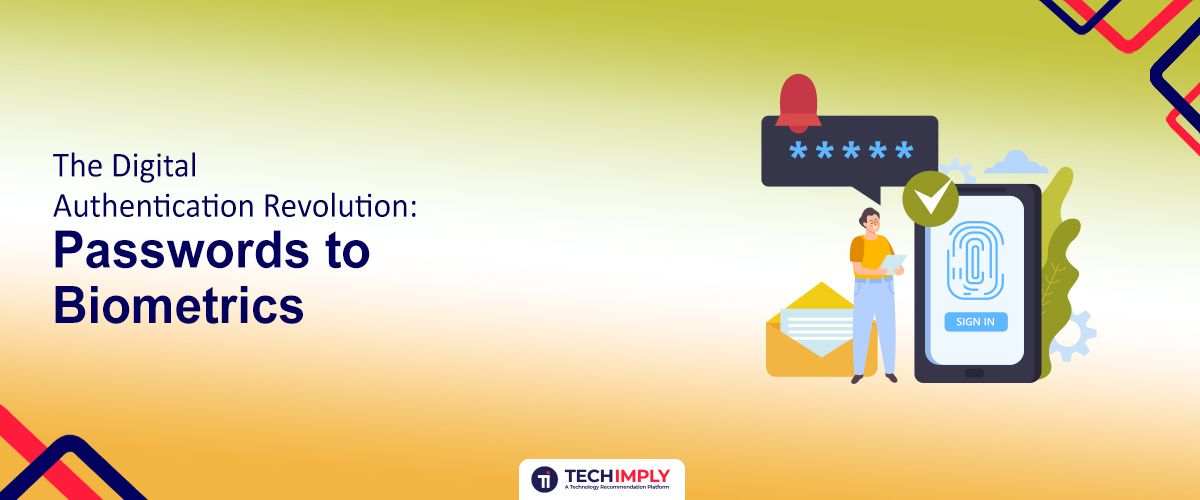
Remember when your biggest security worry was forgetting your password? Those days feel almost quaint now.
Digital authentication has undergone a dramatic transformation over the past two decades. What started as simple username-password combinations has evolved into sophisticated biometric systems that can identify you with a glance or touch.
But this evolution isn't just about convenience. It's about survival in an era where traditional credentials are the weakest link in cybersecurity.
The Great Password Problem
Passwords were never meant to handle today's digital demands. Created in the 1960s for simple computer systems, they've become the weakest link in modern security.
Consider these staggering statistics:
-
81% of data breaches involve weak or stolen passwords
-
The average person manages 100+ passwords across different platforms
-
IT departments spend 30% of their time on password reset requests
-
Phishing attacks succeed 36% of the time when targeting password-based systems
The problem gets worse in enterprise environments. Frontline workers often share credentials, write passwords on sticky notes, or use predictable patterns. Manufacturing floors, healthcare facilities, and retail environments face unique challenges that traditional passwords simply can't address.
Early Authentication: Beyond Simple Passwords
The first major evolution came with two-factor authentication (2FA). Organizations started requiring something you know (password) plus something you have (token or phone).
SMS-based 2FA became popular quickly. But cybercriminals adapted fast. SIM swapping attacks and SMS interception made this method less reliable than expected.
Hardware tokens offered better security. RSA SecurID devices generated time-based codes. But they were expensive to deploy and easy to lose. Employees complained about carrying multiple devices.
Smart cards emerged as another solution. They stored cryptographic certificates and required physical presence. However, card readers were costly, and cards got damaged or forgotten frequently.
The Biometric Authentication Revolution
Biometrics changed everything. Instead of remembering something or carrying something, authentication became about being someone.
Fingerprint recognition led the charge. Apple's Touch ID in 2013 brought biometrics to mainstream consumers. Suddenly, unlocking your phone became as simple as placing your finger on a sensor.
Facial recognition followed quickly. Microsoft's Windows Hello introduced face-based login to computers. The technology improved rapidly, becoming more accurate and harder to fool.
Voice recognition, iris scanning, and even behavioral biometrics joined the party. Each method offered unique advantages for different use cases.
But the real breakthrough came when organizations realized they could eliminate passwords entirely.
Passwordless Authentication: The Game Changer
Modern passwordless authentication solution have revolutionized how we think about security. Instead of layering security measures on top of passwords, they remove passwords completely.
These systems use a combination of biometrics, mobile devices, and hardware tokens to verify identity. Users can access systems through facial recognition, fingerprint scanning, or secure mobile apps—particularly beneficial for frontline workers who often share workstations and need quick, secure access without the delays of password entry.
The benefits are immediate and measurable:
Reduced IT Overhead: No more password reset requests flooding help desks. IT teams can focus on strategic initiatives instead of administrative tasks.
Enhanced Security: Phishing attacks targeting passwords become irrelevant. Multi-factor authentication happens seamlessly without user friction.
Improved User Experience: Employees access systems instantly. No more typing complex passwords or waiting for SMS codes.
Compliance Simplified: Meeting regulatory requirements becomes easier when authentication methods are inherently more secure and auditable.
Industry-Specific Applications
Different industries face unique authentication challenges that biometric solutions address effectively.
Healthcare Environments
Medical professionals need quick access to patient records during emergencies. Traditional password systems create dangerous delays. Biometric authentication provides instant access while maintaining HIPAA compliance.
Shared workstations in hospitals become secure when multiple staff members can authenticate using their unique biological markers. Patient safety improves when the right person accesses the right information at the right time.
Manufacturing and Warehouses
Factory workers often wear gloves, making fingerprint recognition challenging. Facial recognition systems work better in these environments. Workers can clock in and access systems without removing protective equipment.
Shift changes become seamless when biometric systems automatically log out previous users and authenticate new ones. Advanced biometric attendance software has transformed how manufacturing companies track workforce productivity and ensure accurate payroll processing.
Retail Operations
Retail employees frequently share devices and work in fast-paced environments. Biometric authentication speeds up transactions while preventing unauthorized access to point-of-sale systems.
Loss prevention improves when systems can track exactly who accessed what information and when. Employee theft becomes harder when individual accountability is built into every system interaction.
Security Benefits Beyond Convenience
Passwordless authentication delivers security improvements that extend far beyond eliminating forgotten passwords.
Phishing Resistance: Traditional phishing attacks become ineffective when there are no passwords to steal. Attackers can't trick users into revealing biometric data through fake websites.
Reduced Attack Surface: Eliminating password databases removes a major target for cybercriminals. There's nothing to breach when passwords don't exist.
Real-Time Monitoring: Biometric systems provide detailed audit trails. Organizations can track every access attempt and identify suspicious patterns immediately.
Adaptive Security: Modern systems can adjust security requirements based on context. Accessing sensitive data from an unusual location might trigger additional verification steps.
Zero Standing Privileges: Users only get access to resources they need, when they need them. Permissions can be dynamically adjusted based on real-time risk assessments.
Field service teams particularly benefit from these security improvements. Field service cybersecurity protecting data assets becomes more manageable when authentication happens automatically and securely, regardless of location or device.
Implementation Challenges and Solutions
Adopting biometric authentication isn't without obstacles. Organizations must address several key challenges.
Privacy Concerns: Employees worry about how biometric data gets stored and used. Successful implementations use local storage and encryption to address these concerns. Biometric templates, not actual images, get stored in secure databases.
False Positives and Negatives: No biometric system is perfect. Quality implementations combine multiple authentication factors to reduce errors. If facial recognition fails, fingerprint backup ensures access continues.
Integration Complexity: Legacy systems weren't designed for biometric authentication. Modern platforms provide APIs and connectors that simplify integration with existing infrastructure.
Cost Considerations: Initial deployment costs can be significant. However, reduced IT support costs and improved security outcomes typically justify the investment within 12-18 months.
User Adoption: Some employees resist change. Successful rollouts include comprehensive training and highlight personal benefits like faster access and improved security.
The Future of Authentication
Authentication technology continues evolving rapidly. Several trends are shaping the next generation of security solutions.
Behavioral Biometrics: Systems are learning to recognize typing patterns, walking gaits, and device interaction habits. This creates continuous authentication that happens invisibly in the background.
Artificial Intelligence Integration: AI enhances biometric accuracy and detects sophisticated spoofing attempts. Machine learning algorithms adapt to changes in user behavior and environmental conditions.
Quantum-Resistant Security: As quantum computing threatens current encryption methods, authentication systems are incorporating quantum-resistant algorithms to future-proof security.
Decentralized Identity: Blockchain-based identity solutions give users control over their authentication credentials. This reduces dependence on centralized databases that attract cybercriminals.
Contextual Authentication: Future systems will consider location, time, device health, and network conditions when making authentication decisions. Security becomes dynamic and adaptive.
Making the Transition
Organizations ready to embrace passwordless authentication should follow proven implementation strategies.
Start with pilot programs in low-risk environments. Test biometric systems with volunteer users before company-wide deployment. Gather feedback and refine processes based on real-world usage.
Develop clear governance policies around biometric data handling. Address employee privacy concerns proactively through transparent communication and robust security measures.
Invest in employee training and change management. Technical solutions succeed only when people embrace them. Highlight personal benefits and provide ongoing support during transitions.
Plan for gradual migration rather than immediate replacement. Hybrid systems that support both biometric and traditional authentication ease the transition process.
Conclusion
The evolution from passwords to biometrics represents more than technological progress. It's a fundamental shift toward human-centered security that prioritizes both protection and usability.
Organizations that embrace this evolution gain competitive advantages through improved security, reduced costs, and enhanced user experiences. Those clinging to password-based systems risk falling behind in an increasingly digital world.
The future of authentication is here. It's biometric, it's passwordless, and it's transforming how we interact with digital systems.
The question isn't whether your organization will adopt these technologies. The question is how quickly you can implement them before security threats force your hand.