Today, in the digital era, companies and organizations use explainer videos to turn complex ideas into easily digestible information for their target audience. These bite-sized, engaging videos simplify information sharing and provide an effective way for brands to communicate. With the help of advanced video editing software, businesses can craft visually appealing and impactful explainer videos that resonate with their audience. There are different types of explainer videos, and their choice will depend on the message you want to give and the target audience, as well as the impact you want to achieve. In this article, we explore the types of explainer videos, what makes them special, and when you might use them.
Why Explainer Videos Matter
Not only are the different types of explainer videos an effective means of communication, but they also leverage the power of storytelling to tap into the viewer's emotional connection to the brand or message they see. By using engaging visuals, sound effects, and voiceovers, such videos can simplify complex concepts into bite-sized, easy-to-understand formats. This is especially beneficial to businesses within complicated product or service industries, where a standard approach may not cover the important aspects through one single platform.
Also, explainer videos cater to a growing inclination toward consuming visual-based content. As engagement across platforms such as YouTube, Instagram, and TikTok has well and truly taken off, even brands are beginning to discover that videos are 40 times more likely to be shared than text. This viral potential allows a good explainer video to reach a wider audience and generate valuable word-of-mouth marketing.
Adaptability is another significant benefit of explainer videos. They are versatile and can be utilized in a range of scenarios, from websites and landing pages to social media posts, email campaigns, and product demos. This flexibility makes it easy for businesses to implement them at various points within the customer journey, from awareness through education for prospective customers all the way to helping existing customers get the most value out of their products or services.
Besides increasing user engagement, explainer videos can also boost your SEO rankings. Search engines prefer videos, which increases the visibility of a brand and drives more organic traffic. This synergistic influence of user engagement, visibility, and educational impact renders explainer videos an invaluable asset for businesses looking to succeed in the contemporary dynamic digital environment.
Different Types of Explainer Videos and How to Use Them
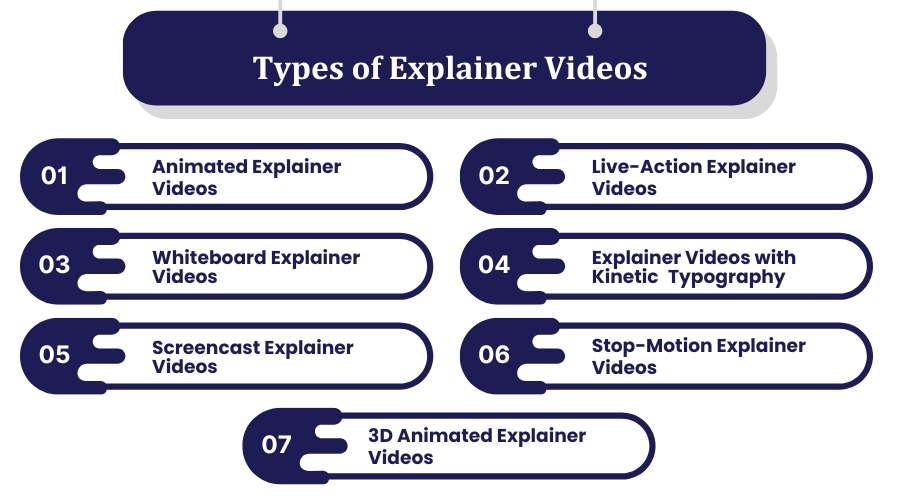
There are different styles of explainer videos used by different businesses and industries to fulfil their effective communications goals. Here is an overview of the most popular types of explainer videos and how to use them.
Animated Explainer Videos
Animated explainer videos are designed to creatively deliver messages through graphic design and motion. They are flexible and easily depict abstract concepts, processes, and ideas. This type of content is popular because businesses can create videos without needing actors, location, or production costs.
Animated videos can be easily customized to include brand colors, logos, and even mascots. They work especially well for showing how software applications work, explaining complex financial services, or presenting products in a fun manner.
Live-Action Explainer Videos
The fact is that live-action explainer videos feature real people, locations, and objects to deliver a narrative. Such images add a human aspect that makes brands appear more relatable and trustworthy. By using actual employees or happy customers, companies can build an emotional connection with their audiences as well.
Live-action videos offer authenticity and credibility in industries that rely heavily on personal interaction, such as healthcare, legal services, and hospitality. They’re also great for product demos, testimonials, or behind-the-scenes sneak peeks of your company.
Whiteboard Explainer Videos
Whiteboard explainer videos display hand-drawn illustrations that develop in real time, so they’re perfect for breaking down sophisticated matters. This minimalist format focuses on the message and is well suited for training and e-learning.
Because whiteboard animations mimic the writing process on the board, they are perfect for explaining step-by-step processes, tutorials, or quite technical ideas. Teachers, coaches, and business owners who need comprehensive training material especially favor this format.
Explainer Videos With Kinetic Typography
Kinetic typography videos (text + music + or even narration) effectively highlight key points. These videos visually attract the audience by using motion to emphasize important words or phrases, hence amplifying engagement.
This approach works especially well for motivational content, brand awareness campaigns, and public service announcements. Kinetic typography helps companies spotlight their brand's mission, share impactful statistics, and/or express exciting statements in an engaging way.
Screencast Explainer Videos
Screencast videos record computer screens with an additional narration to walk users through various processes, which is why they are especially effective for instructional content. This puts into practice learning: seeing what needs to be done and how to do it.
Tech firms, online educators, and software developers commonly use screencast videos to demonstrate how a product works, teach customers how to use applications, or provide customer support. This is particularly useful for onboarding new users and minimizing support tickets.
Stop-Motion Explainer Videos
A stop-motion explainer video uses a series of photographed frames to create the appearance of motion. This art style adds a bizarre but refreshing feel to the content as it's a sort of blend between retro and unique visuals.
Although this type of animation demands extra work to create, stop-motion brings a level of character and genuineness to clips. Brands also use stop-motion to create high-end product promotions, creative branding campaigns, and engaging social media content. Fashion, food, and lifestyle brands are used to leverage stop-motion to give some artistic flair to their messaging.
3D Animated Explainer Videos
3D explainer videos are very immersive, thanks to their depth and realism. They are commonly used for complex product displays and premium advertising campaigns. With hyper-realistic visuals that let audiences examine merchandise from any direction, 360-degree videos work well for industries such as architecture, healthcare, and automotive design.
3D animation is also very useful for demonstrating detailed designs, prototypes, and engineering concepts. It offers a classy and professional way of showcasing a product or service that requires accurate visualization.
Explainer Videos: Their Impact on Marketing
That is where explainer videos play a crucial role in digital marketing. They not only improve the brand's SEO rankings but also help brands enhance their social media presence and conversions. Search engines also prefer video posts, which results in higher visibility and increased website traffic. The click-through rates of businesses utilizing explainer videos in their marketing approaches tend to be greater, the time spent on the website longer, and the remembrance of the brand gradually increases.
Apart from SEO advantages, explainer videos increase the effectiveness of social media, attracting shares, likes, and comments. Facebook, Instagram, YouTube, and all these platforms prioritize video, making it a highly profitable asset for businesses to grow in the online arena. Ads on platforms with links from within have also outperformed static images, reels, and text-based posts.
Explainer videos are also valuable for optimizing conversion. Research indicates that potential customers are more inclined to complete a purchase after viewing an informative and engaging video. Explainer videos are used by businesses on landing pages, product pages, and as part of email marketing campaigns to help customers navigate successfully through their respective sales funnel. Explainer videos can increase conversion rates massively by simplifying messages and getting the value of a product or service across a person’s head visually.
How to Create High-Quality Explainer Videos

It can be tempting to cover every detail but to maximize the impact of an explainer video, focus on what’s essential and keep it short. As people have short attention spans, they lose interest in long videos, so an explainer video should ideally be between 60 and 90 seconds long. The leading few seconds need to catch the audience's attention and tell them what will be shown in the video.
Strong storytelling is also a pivotal element of a good explainer video. Companies should tell a story rather than inform consumers about the features of their products. Relatable characters, humor, and real-world scenarios can all help reinforce the message and make the video relatable, memorable, and impactful.
Animation or videos make a lot of sense with premium visuals, professional voice-overs, etc. Sloppy animations or bad audio greatly undermine credibility and engagement. Financial commitment to animation, sound design, and narrative voiceover gives the video a professional touch.
A strong call to action (CTA) guides viewers on the next action they should take. Asking for the CTA should always be clear and made within the context of subscribing to a service, visiting a website, and buying a product. Moreover, businesses can align CTA with their marketing objectives, such as lead generation, brand identity, or product sales.
If people get tired of slow-loading videos and go back to the YouTube search results page, it will hurt your chances of getting views, so optimizing your videos for mobile viewing can go a long way to ensure a good user experience. Given that the majority of video content is consumed on devices like smartphones and tablets, you should ensure that your explainer videos are designed for mobile. That means using fonts that are readable, ensuring your pages load quickly, and maintaining an aspect ratio compatible with mobile screens.
Finally, testing and reviewing video performance can offer insights into the most effective methods of message delivery. Businesses use metrics, including view duration, engagement rates, and conversion rates, to measure video performance and refine video strategy. understanding hidden dislike counts and how they are estimated can add useful context to visible engagement signals. Also, A/B testing different versions of an explainer video can help determine the most effective messaging and presentation style.
Conclusion
Since then, the importance of explainer videos has multiplied, transforming the way we communicate in business by explaining complex aspects in an engaging manner. Whether using animated storytelling, live-action demonstrations, or screen-recorded tutorials, each of these explainer video types serves a different purpose. By gaining knowledge about these styles and their applications, businesses can select the most effective way of engaging and impacting their target audience.
The best thing is that most brands will find every reason to invest in explainer videos, as it is a worthwhile investment.