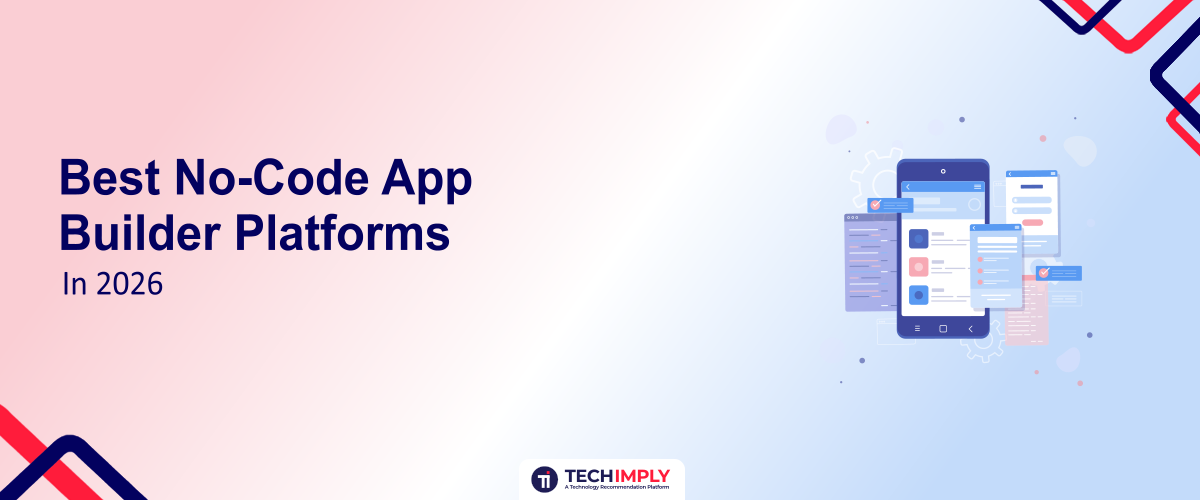
Not that long ago, getting an app built meant finding a developer, waiting a couple of months, and paying a few lakh rupees before you'd even know if the idea was worth pursuing. Honestly, that's changed. A founder, a shop owner, someone running an internal team any of them can now put together a working app in a matter of days, no developer required. Take a shop owner in Jaipur who wants to start taking orders online, or someone running ops at a Bengaluru startup who just needs a way to track internal requests a no-code tool gets either of them there faster than posting a job listing ever would.

Looking for No-Code app builder Software?
Check out Techimply's List of the Best No-code app builder Software in India for your business.
In India, this matters even more than it might elsewhere. Developer salaries keep climbing, a custom build still eats two to three months more often than not, and a lot of small and mid-sized businesses simply don't have that kind of runway to spend testing one idea. No-code tools sidestep all of it drag-and-drop editors, templates already built, integrations that don't need to be coded from scratch. You get to try the idea out, put something real in front of people, and only call in a no code development later if the thing genuinely needs custom code. What follows is a look at which platforms are actually worth your time this year, roughly what they cost in rupees, and how to work out which one fits what you're building.
Why No-Code Is Catching On in India
India's small business and startup scene runs on speed and tight budgets, and no-code happens to suit that. A shop owner wanting online orders, a school that needs to track fee payments, a logistics company that wants drivers logging deliveries from their phones none of it needs a technical co-founder anymore. That's a big reason no-code has gone from a niche experiment to something businesses just use now, without thinking twice.
There's also been a real narrowing between what a no-code app can do and what a fully custom one can do. Razorpay and UPI integration, push notifications, offline syncing, even a bit of AI app builder, all of that meant a dedicated dev team. Now it's built into the platforms themselves, so a business that assumed it needed programmers on staff can build, test, and adjust the thing on its own.
Here's a number worth sitting with: some no-code platforms report a working prototype in under two weeks, against two to three months for the same thing built from scratch. On a limited runway, that's not a small difference it's often the gap between testing three ideas and testing one.
What Makes a Platform Worth Choosing
Not every platform holds up once it leaves the demo stage plenty look polished right up until real users start poking at them. A handful of things tend to separate the ones worth your time.
Start with ease of use. If a founder with zero technical background can't get a working screen up inside an hour of signing up, that's already a bad sign.
Then there's scalability, which matters especially for Indian businesses hoping to grow quickly going from 100 users to 10,000 shouldn't mean starting the build over.
Integration support decides how useful the app actually becomes, since most Indian businesses are already running on Google Sheets, Tally, Razorpay, or WhatsApp Business whatever you pick needs to talk to those without a fight.
And it's worth digging into pricing before you commit. A lot of these tools quote in dollars, so what you actually pay in rupees moves with the exchange rate, and some plans don't mention per-user or per-workflow charges until you've already scaled past the free tier.
Before signing up anywhere, it's worth building a small test project. Nearly every platform has a free tier, so spend an hour rebuilding a real workflow from your business an order form, a leave-request tracker, whatever's relevant before deciding where your money goes.
Top No-Code App Builder Platforms in 2026
Here's what Indian businesses are actually reaching for this year, with rough pricing converted at about ₹95 to the dollar.
1. Bubble Best for Web Apps and Marketplaces
Bubble remains one of the more powerful options for anything complex on the web marketplaces, booking systems, SaaS products. You get a visual editor for database structure, workflow logic, and interface design, all without touching backend code, and that's part of why it's a go-to for Indian founders working on their first real product. Free plan to start, with paid tiers from around ₹1,850/month depending on usage. It suits founders who need a real database behind the product, though be warned the learning curve here is steeper than most of the others on this list, so give yourself a week or two before it starts to click.
2. Adalo Best for Simple Mobile Apps
Adalo is built for mobile specifically, producing iOS and Android apps that feel native, made through drag-and-drop rather than code. Indian retailers or service businesses after a simple ordering or booking app builder without wanting to deal with complicated logic tend to land here, since it balances ease and capability reasonably well. There's a free tier for testing, and paid plans run from roughly ₹1,425/month. It's a strong fit for a straightforward customer-facing app, less so once the app gets data-heavy that's where it starts to slow down.
3. Glide Best for Turning Spreadsheets into Apps
Got a Google Sheet or an Airtable base already running your business? Glide turns that into a working app in a few minutes flat. Indian small businesses tracking inventory, orders, or staff data in spreadsheets tend to like this one specifically because it just adds a mobile-friendly layer on top no rebuilding required. Free for basic use, paid plans from around ₹1,805/month. Keep the data structure simple, though; anything with heavier custom workflows tends to outgrow it fast.
4. AppSheet Best for Google Workspace Users
Google owns AppSheet, and it shows it connects straight into Sheets, Forms, and Drive, which makes it an obvious pick for businesses already living inside Google Workspace. It's particularly good for internal tools: inspection checklists, delivery tracking, field service apps, that kind of thing. Personal use is free, and paid plans run around ₹475 per user per month. It's not the prettiest interface out there, if we're honest more functional than polished so it works better as an internal tool than something you'd put in front of customers.
5. Nativly AI Best AI mobile app builder
Nativly AI is a free AI mobile app builder that helps turn your app idea into a complete working app with a single prompt. It makes app creation simple for founders, startups, and businesses without coding.
As a No code mobile app builder, Nativly AI lets users describe what they need and quickly generate a complete app. The Nativly AI app builder makes it easier to build, customize, and take an app from idea to launch.
6. Softr Best for Building on Airtable
Softr is for building client portals, directories, and internal dashboards on top of Airtable data, no coding needed. Indian agencies and consultancies use it to get client-facing portals up fast, largely because permissions and access controls are handled cleanly out of the box. There's a free plan, with paid tiers starting near ₹2,850/month. It works best for agencies or service businesses that need something polished and permission-based for clients just know it leans heavily on Airtable as the backend, so you'll need to be comfortable managing data there.
7. Zoho Creator Best Homegrown Option for Indian Businesses
Zoho Creator earns a mention on its own merits it's built by an Indian company, and it understands local compliance, invoicing, and workflow needs in a way the international platforms sometimes don't. GST-compliant billing, tight integration across the rest of the Zoho suite, and support that actually runs on Indian business hours. Plans start around ₹665 per user per month, billed annually. It's a solid pick for businesses that want strong local support, though it works best alongside other Zoho products standalone, it's usable but noticeably less powerful.
How to Pick the Right Platform for Your Business
Really, it comes down to matching the tool to what you're building instead of whichever one has the flashiest marketing page.
Building something customers will use directly? Adalo gives you native-feeling output without piling on complexity. Need an internal tool instead? AppSheet or Zoho Creator tend to connect more cleanly with the spreadsheets and workflows your team's already using. A web app, directory, or marketplace is a different animal that's where Bubble, Softr, and Glide earn their keep. Let the thing you're building point you to the platform, not the other way around.
Where your data actually lives is worth a look too before you sign anything. If you're handling customer data in India, check that the platform aligns with the Digital Personal Data Protection (DPDP) Act it matters more the bigger you get. And don't forget the currency angle: most of these bill in dollars, so an exchange rate move can quietly push your monthly cost up without anything on your end changing.
Conclusion
Going with a no-code platform doesn't mean settling for something half-finished anymore. Payments, notifications, offline syncing, even a bit of AI today's tools cover enough ground that most Indian businesses can get something genuinely usable live without hiring a dev team. Pick based on what you're actually trying to build rather than a spec sheet, start small, get it in front of real users early, and let it grow alongside the business instead of trying to nail everything on day one. The advantage stays the same no matter which platform you land on you're testing an idea in days instead of months, for a fraction of what custom development would run you.