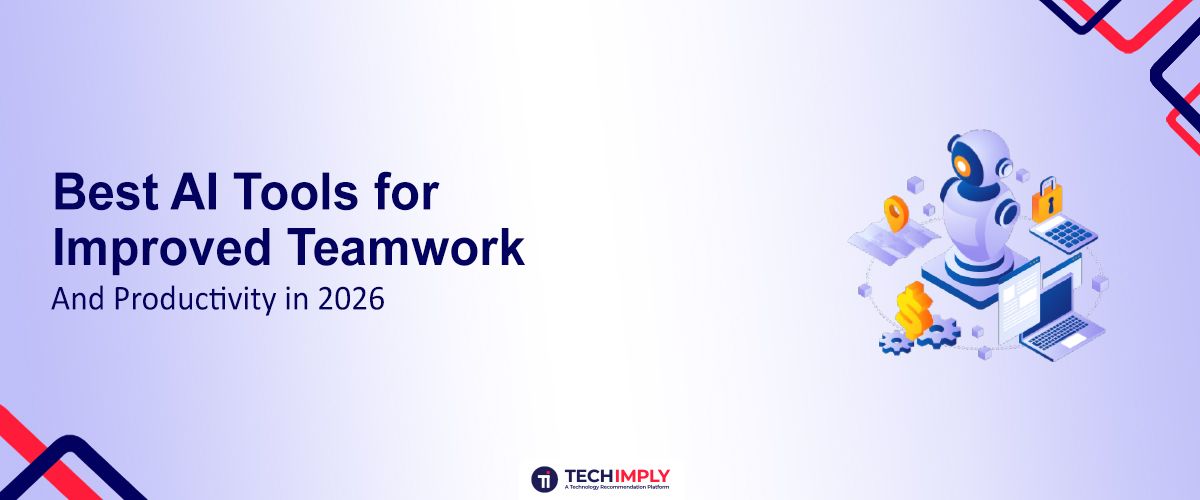
AI is no longer just associated with automating routine. At issue is the presence of productivity bottlenecks - those invisible sticking points that inhibit teams, slow down decision-making, and create burnout. By the year 2026, the best organizations will be powered by artificial intelligence, rather than just utilizing artificial intelligence. AI-based collaboration tools are re-inventing how teams work, collaborate, communicate, and perform in activities from workflow management to driving creative thinking.
Let's take a look at some of the best AI tools and Team Collaboration Software emerging for productivity in 2026, and how they are establishing the new standard for smart collaboration.
1. Asana Intelligence – Predictive Workflows
For years, Asana has been where teams go to execute complex projects. With Asana Intelligence, this is now not just a simple project tracker but a smart companion in forecasting for teams. Its AI layer helps automatically bring priority to tasks, accurately predict realistic timelines of completion, and even helps flag potential roadblocks before they slow things down. For project managers balancing multiple initiatives, that means less guesswork and a lot more clarity and confidence in planning ahead.
Why teams love it:
Predictive workload and deadline optimization
AI-based task recommendations and planning analysis
Deeper insights into project health and dependencies
Asana Intelligence lets teams act, not react—keeping projects on schedule with minimal human touch.
2. Troop Messenger – AI Collaboration Suite for Contemporary Enterprises
For enterprise collaboration, Troop Messenger is among the most inclusive platforms around.
In 2026, Troop Messenger is embedding more advanced AI capabilities that extend way beyond chat and document sharing. Its AI engine automates requests internally, simplifies communication workflows, and enables teams to collaborate securely across hybrid or on-premise configurations.
Differentiating strengths:
AI-driven workflow automation within chat
Compliance-grade security and access control
On-premise and private cloud deployment options
For enterprise organizations that have rigorous data governance requirements, Troop Messenger provides the optimal combination of speed, automation, and security.
3. Atlassian Intelligence – Supercharging Engineering Collaboration
In no time, Atlassian Intelligence has become a must-have in the case of big engineering, IT, and product teams. Because it smoothly integrates with Jira and Confluence, it automates tasks such as raising tickets, refining backlogs, and searching for information across documentation. And teams get answers instantly at the point of need, without having to comb through tons of files.
Top advantages:
Automatic triage and prioritization of issues
Context-aware documentation and insights
Optimized for DevOps, ITSM, and agile project environments, Atlassian's AI effectively acts like an engineering co-pilot to reduce manual backlog grooming and smooth out collaboration at scale.
4. Miro AI – Supercharging Brainstorms
Every great idea starts with a messy conversation, but Miro AI makes sure none of those ideas get lost. Its AI tools turn sketches and scribbles into clear mind maps and summaries, right in the middle of your workshop.
While you brainstorm, Miro captures the highlights and builds visual workflows you can share with everyone.
Why teams love it:
Auto-creates diagrams and brainstorming maps.
Summarizes meetings without missing the important stuff.
Perfect for design, product, and innovation teams.
With Miro AI, the creative spark doesn’t fizzle out. It moves ideas from talk to action fast.
5. Airtable AI – Transforming Data Into Action
When teams rely on data, Airtable AI is the game changing resource. It organizes your messy spreadsheets and creates insights that you can actually leverage, thanks to predictive modeling and AI formulas. All of that boring data checking and tedious reports? Gone. You will have triggers and workflows that trigger and work on their own. So, you don’t have to lift a finger.
Core features:
Smart formula and report generation
Predictive workflows linked to data sources
Great for product, ops, and analytics teams
Airtable AI turns your spreadsheets into a proactive decision-making tool—an invaluable upgrade for data-driven enterprises.
6. Evernote with AI Workflows – Smarter Knowledge Management
By 2026, Evernote isn’t just a spot for scattered notes anymore—it’s turned into a real AI-powered knowledge hub with built-in AI workflow automation capabilities. The AI doesn’t just tidy things up. It finds the connections you might miss, reminds you about stuff before you forget, links ideas together, and honestly, it can take your messy thoughts and spit out a clean outline in seconds.
If your team deals in research, brainstorming, or planning, the AI within Evernote takes a bunch of that repetitive work off your plate.
Why it's useful:
AI-based tagging, reminders, and organization of notes
Smart creation of tasks from stored content
Best suited for writers, researchers, and analysts
Evernote's transformation is a case of how AI innovation can reinvent even very long-standing tools.
7. Drift AI – Accelerating Customer Conversations
While most AI tools are focused on internal operations, Drift AI is focused on customers.
It accomplishes this by utilizing conversational AI in the qualification of leads, answering questions, and routing prospects to the right person—automatically. That quickens response times and keeps the sales funnel going 24/7.
Highlights:
Intelligent lead qualification and routing
AI summaries of customer interactions
Perfect for sales, marketing, and GTM teams
Drift AI turns conversations into conversions—helping businesses boost their revenue pipeline without overloading the team.
8. Tome AI – From Ideas to Presentations in Seconds
Creating a presentation used to take several hours. With Tome AI, this process now takes minutes.
You can type a single prompt, and Tome instantly designs beautiful, data-driven slides. It incorporates brand visuals, charts, and narratives into a cohesive story ready to present.
What makes it great:
AI-powered storytelling and layout creation
Integrations with enterprise data and analytics
Ideal for leadership, marketing, and product demos
In the age of rapid communication, Tome AI helps professionals express ideas visually—without the creative drag.
9. Taskity – Redefining Execution Speed
Taskity stands out as a next-generation AI work management platform that emphasizes execution over tracking.
Rather than just listing tasks, Taskity automates task prioritization, follow-ups, and accountability tracking. Its intelligent assistants ensure that important actions don’t get buried under notifications.
Best features:
AI-powered prioritization dashboards
Execution-focused automation
Designed for delivery-oriented teams
Taskity acts as a digital partner, keeping projects moving swiftly and ensuring no deadlines slip through the cracks.
10. Monday AI – Automating the Everyday Chaos
Monday.com continues to lead the way in flexible team management. Its AI blueprints now help organizations automate entire workflows—from content creation and approvals to campaign tracking and reporting.
Imagine having a digital assistant that writes updates, organizes boards, and reminds you of pending approvals. That’s Monday AI in action.
What sets it apart:
Smart automations for cross-functional workflows
Built-in AI content and summary generators
Ideal for operations, marketing, and HR teams
With Monday AI, routine coordination work goes to the background, freeing up teams to create and make decisions.
11. Typeface – Marketing Orchestration Engine for Enterprise Teams
For marketing teams under pressure to produce more content without sacrificing quality, Typeface is built to keep up. It's an AI-powered platform that combines brand intelligence, multi-channel content creation, and purpose-built Arc Agents into one unified workspace. Whether it's ad copy, emails, blog posts, or social content, Typeface generates it all while staying locked to your brand voice.
Teams organize campaigns and content workflows inside Arc Spaces, keeping assets, briefs, and outputs neatly grouped by project or use case. And with Agent Studio, teams can build and automate custom content pipelines without any technical expertise.
Why teams love it:
-
Arc Graph ensures every output stays on-voice and on-brand, automatically
-
Dedicated Arc Agents for ads, email, web, video, and images handle end-to-end creation
-
Arc Spaces keep cross-functional teams aligned and content organized at scale
For enterprise marketing teams that need to move fast without losing consistency, Typeface removes the bottlenecks between idea and execution.
Creating a Plan for the AI-Enabled Workplace
Choosing the best collaboration tools isn’t only about the basics of working more efficiently, it’s creating the thinking space for AI to be able to help your team work at their best.
As you plan your stack of AI-enabled workplace tools for 2026, the most important thing to remember is:
First, decide how you are going to remove the pain points until you automate anything. Where is your team wasting time in asking employees for updates, for your own research and reporting, or for all the threads of communications multiple times? Use AI to remove those workflows.
Second, avoid asking too far and too many apps. When you have too many apps, context is lost. I would try to limit one or two platforms that connect to existing tools, and think about bumping them straight away!
Thirdly, security and compliance should be on the forefront of your mind. If you have sensitive data, you want the ability to enable AI in the workplace to ensure your trust. Products such as Troop Messenger provide you with a private cloud or hybrid cloud to ensure that your data is secure and kept safe.
Fourth, keep return on investment in mind at the beginning. As you save time and efficiency with the decision-making processes, consider if your team is more (or less) engaged within the first three months. If the AI is working, it will manifest quickly!
Work will be defined by collaboration with AI
The workplace represents a web of simultaneous decisions, communication, and action occurring across geography and time zones. AI does not substitute human collaboration; it will enhance it.
AI removes low-value manual tasks and provides humans with time to do what they do best - innovate, create, and collaborate.
In 2026, the market leaders will be the companies who are able to run at three speeds:
Communication speed
Execution speed
Decision-making speed
Collaboration and productivity tools that use AI—such as Asana Intelligence, Monday AI, Troop Messenger, and others—are the foundations of that future.
The opportunity will not be to adopt AI but to lead with AI.