


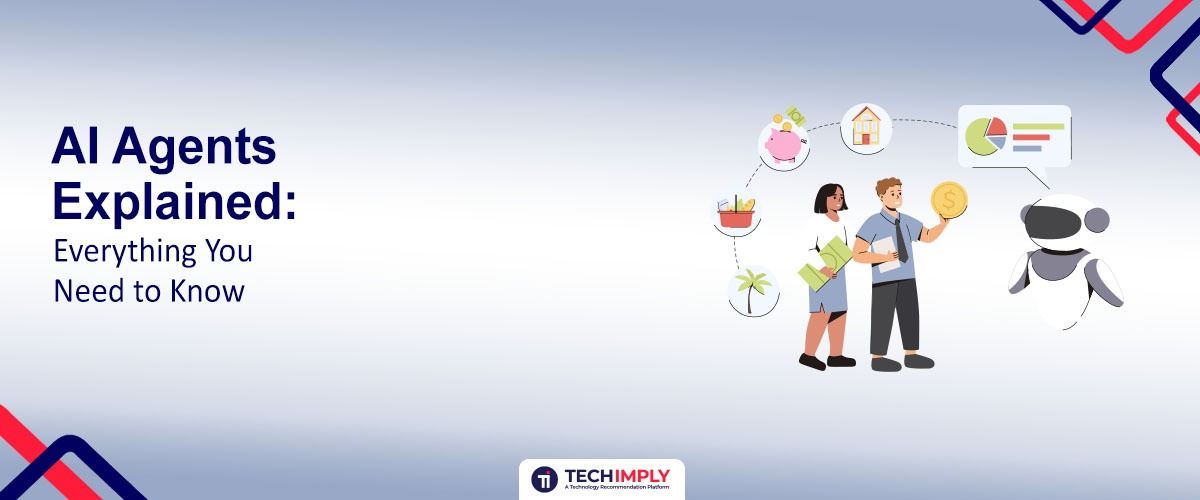
The landscape of technology has shifted remarkably, moving from tools that simply answer questions to systems that actually get things done. AI Agents have emerged as the defining technology of 2026, transforming our digital interactions from passive searches into active, goal-oriented executions. Unlike the chatbots of the past, an intelligent agent in AI doesn't just provide information; it understands intent, plans a sequence of actions, and interacts with other software to complete complex workflows on your behalf.

The rise of agentic AI represents a fundamental pivot in how we collaborate with machines. We are no longer just "prompting" a model to get a text response; we are now delegating responsibilities to a sophisticated AI Agents that can manage your calendar, negotiate a refund with a service provider, or even conduct deep-market research across multiple platforms simultaneously. As these systems become more integrated into our daily lives, understanding their internal logic and variety becomes essential for anyone looking to stay ahead in this new era of automation.
How Do AI Agents Work?
To understand how an AI Agent functions, think of it as a "digital employee" equipped with a brain, a memory, and a specific set of tools. While a standard AI model waits for a prompt to generate a static result, an agent operates in a continuous loop, allowing it to move beyond simple text generation. It observes its environment, reasons through a problem, and then acts independently to achieve your goal. The core process follows a sophisticated "Reasoning Action" cycle:
-
Perception
The agent "sees" the data or environment, such as your email inbox, a specific database, or live web pages, to gather context. It constantly monitors these inputs to identify changes or new information that requires an immediate response or adjustment. This stage ensures the intelligent agent in AI is grounded in real-time reality rather than relying solely on static training data.
-
Reasoning
It breaks down your high-level goal like "Book a trip to Mumbai for under ₹15,000" into a logical sequence of smaller, manageable steps. The agent evaluates the best path forward, anticipates potential hurdles, and creates a mental roadmap to complete the task efficiently. This specific step is what distinguishes a simple bot from a truly intelligent agent in AI capable of complex thought.
-
Action
It uses specialized tools like APIs, web browsers, or internal business software to execute the steps it planned during the reasoning phase. This might involve sending a confirmation email, querying a price database, or autonomously filling out form a travel booking. The agent interacts with the digital world just as a human would, utilizing its tools to complete the work without constant supervision.
-
Observation
It checks the result of its action—for example, "Is the flight still available at the price I found?"—to verify if the step was actually successful. If the situation has changed or an error occurs, the agent feeds this feedback into its brain to adjust its plan and try a different approach. This continuous feedback loop allows for autonomous problem-solving and ensures the AI Agent reaches the desired outcome.
Different Types of Agents in AI (With Examples)
Not every intelligent agent in AI is built the same way. Depending on the complexity of the task, developers use different types of agents in AI to achieve specific results. Here is a breakdown of how these specialized systems function in 2026.
1. Simple Reflex Agents
These are the most basic form of AI, acting solely based on the current situation while ignoring history or future context. They operate using a set of pre-defined "If-Then" rules to trigger immediate responses to specific stimuli without complex reasoning. For example, a smart thermostat in a Delhi office might be programmed to turn on the AC automatically the moment the room temperature exceeds 24°C.
2. Model-Based Reflex Agents
These agents maintain an internal "model" of the world, allowing them to handle situations where parts of the environment are currently hidden from view. By remembering past data, they can track objects or states that aren't immediately visible to their sensors at that exact moment. A self-driving car uses this logic to "know" a pedestrian is behind a parked truck simply because it saw them walk there a second ago.
3. Goal-Based Agents
This type of intelligent agent in AI acts based on a specific objective, evaluating various actions to see which ones lead to the desired outcome. Unlike reflex agents, they plan for the future and can choose between multiple sequences of actions to reach their target most effectively. A goal based agent example is a navigation system that finds the most efficient route to your destination rather than just reacting to the next turn.
4. Learning Agent in AI
The learning agent in Artificial Intelligenceis specifically designed to improve its performance over time by analyzing its own experiences and successes. It utilizes a "critic" to provide feedback on its actions and a "learning element" to make internal adjustments for better future results. For instance, a recommendation engine learns you prefer Bollywood thrillers on Friday nights and adapts its suggestions to match your evolving taste.
5. Multi-Agent Systems
In a multi-agent system, several AI Agents work together or sometimes compete to solve a complex problem that a single agent couldn't handle alone. These systems require high levels of coordination and communication to ensure that individual actions contribute to the collective goal across different departments. An automated warehouse is a perfect example, where one agent manages inventory while another directs robots to fetch items for shipping.
6. Utility-Based Agent in AI:
A utility based agent in AI goes beyond just reaching a goal; it asks, "How happy will the user be with this specific result?" It uses a mathematical "utility function" to choose the best option when multiple successful paths are available for the task. For example, a flight booking agent doesn't just find any flight to Bengaluru, but selects the one that perfectly balances a low price in Indian Rupees with your preference for shorter travel times.
Real-World AI Agents Examples (2026 Use Cases)
We have moved past the experimental phase. Today, ai agents examples are found across every major industry, providing tangible value and saving thousands of man-hours. In 2026, these systems have transitioned from simple assistants to autonomous partners that manage end-to-end workflows.
-
Personal Assistants
Modern assistants have evolved into comprehensive life managers. They can now handle multi-step, cross-platform tasks like "Plan a dinner party for five people with a budget of ₹5,000 and send out the invites." These agents autonomously check your bank balance, search for recipes based on dietary needs, order groceries, and coordinate with your friends' digital calendars to find the perfect time.
-
Software Development
"Agentic coding" is now the industry norm, moving far beyond simple autocomplete. Tools like Cursor, Claude Code, and Devin act as autonomous teammates that can take a single GitHub issue and run with it writing the code, executing test suites, fixing bugs, and even deploying patches. This allows human developers to step back from the "mechanical" coding and focus on high-level architecture and system design.
-
Customer Support
The modern ai chatbot is no longer a frustrating "I didn't understand that" bot. Built on "Resolution Engines," these agents verify your identity through secure protocols, navigate complex CRMs like Salesforce, and process real-time transactions. For instance, an agent can autonomously authorize a return and issue an instant refund to your UPI account or bank, resolving in seconds what used to take days of human back-and-forth.
-
AI Agents for Healthcare
In 2026, ai agents for healthcare are revolutionizing patient management through proactive monitoring. These agents continuously analyze vitals from wearable devices and cross-reference them with a patient’s Electronic Health Records. Instead of flooding doctors with data, they only alert a specialist in Mumbai when they detect a genuine clinical risk, significantly reducing burnout while ensuring patients receive life-saving interventions exactly when they need them.
Do You Know?
By the end of 2026, it is estimated that over 60% of all online customer service interactions will be handled by autonomous AI Agents capable of executing transactions, not just talking about them.
Why AI Agents are the Future (Benefits)
The shift toward an intelligent agent in AI is driven by efficiency and scalability. Unlike humans, agents don't get tired; unlike traditional software, they don't need a specific "button" for every task.
- 24/7 Productivity: Agents work around the clock without breaks.
- Cost Efficiency: Automating a workflow that once took a team of five can now be done for a fraction of the cost in Indian Rupees.
- Hyper-Personalization: A learning agent in AI provides an experience tailored specifically to your habits and preferences.
How to Get Started with AI Agents
Entering the world of agentic AI is easier than ever in 2026. You don't necessarily need a PhD in computer science to begin.
- Identify the Workflow: Look for repetitive, multi-step tasks that follow a logical pattern.
- Choose a Platform: Use low-code agent builders, frameworks like LangGraph or CrewAI, or partner with an Agentic AI Development Company.
- Define the Tools: Decide what the agent needs access to (e.g., your email, a database, or a web search tool).
- Set Guardrails: Ensure the agent has clear limits on what it can and cannot do, especially regarding financial transactions.
Challenges & Ethical Considerations
With great power comes the need for serious oversight. As we deploy more AI Agents, we must address several critical hurdles.
- Agentic Bias & Algorithmic Fairness: If the data used to train an agent is biased, its actions will be too. This is particularly dangerous in hiring or loan approval agents.
- Data Minimization & Shadow AI: Agents often need broad access to data to be effective. However, we must ensure they only "see" what is necessary to prevent privacy leaks.
- The Accountability Gap: If an AI Agent accidentally makes a financial error worth ₹50,000, who is responsible? The developer, the user, or the platform provider?
- Prompt Injection & Indirect Attacks: Malicious actors can "trick" an agent by feeding it hidden instructions via an email or a website the agent is browsing.
Agentic AI vs. Generative AI: What’s the Difference?
While they share the same DNA, agentic AI and Generative AI serve very different purposes.
|
Feature |
Generative AI |
Agentic AI (AI Agents) |
|
Core Goal |
Content Creation |
Task Execution |
|
Output Type |
Text, Image, Code |
Completed Action / Workflow |
|
Reasoning |
Linear (Response-based) |
Iterative (Planning-based) |
|
Autonomy |
Low (Needs human prompts) |
High (Self-directed goals) |
|
Tools & Access |
Limited |
High (APIs, Browsers, Software) |
|
Feedback Loop |
None |
Continuous (Self-correction) |
|
Human Role |
The Creator |
The Supervisor |
Conclusion
The evolution from basic chatbots to fully autonomous AI agents has been both fast and impactful. As shown through various AI agent examples, these systems are no longer optional they are becoming essential for modern businesses and everyday productivity. From a utility-based agent in AI helping you make smarter investment decisions to AI agents for healthcare improving patient outcomes, the emphasis has clearly shifted from what AI can communicate to what it can accomplish. By understanding the different types of agents in AI, you can stay better prepared for a future where one of your most valuable assets could be intelligent, agent-driven software.


.png "8 Best Billing And Invoicing Apps in 2022")


